The Man Trying to Enable a Sovereign Online Future Built by AI
24 October 2026•


Dominic Williams and DFINITY Foundation are behind an open cloud that solves growing needs within the critical realms of sovereign tech and agentic infrastructure, pulling it to center stage, from Islamabad to the United Nations.
Today, all around the world, there is a growing clamor for sovereign tech infrastructure. Cloud and SaaS (i.e. Software as a Service) are now key foundations of modern societies, without which they cannot run. On the one hand, geopolitical tensions mean that governments want to ensure foreign powers cannot access their data, or deny them access to their infrastructure after disagreements, and enterprise too is seeking ways to reduce risky dependencies, and must comply with a growing body of regulations that require the re-homing of computation. On the other hand, the world is moving towards a future where AI builds its online services, and is deeply integrated with them.
Enter Dominic Williams and the DFINITY Foundation, a not-for-profit research operation based in Zürich, Switzerland, that has spent more than half a billion dollars developing a new kind of tech infrastructure that it calls the “Internet Computer.” Williams describes his mission as providing an open technology stack: "The Internet Computer is a new kind of cloud, created the internet way, essentially by extending the network so that as well as connecting software, which makes systems like the web, email, chat and SaaS possible, it can also securely and resiliently host the software and data that powers them."
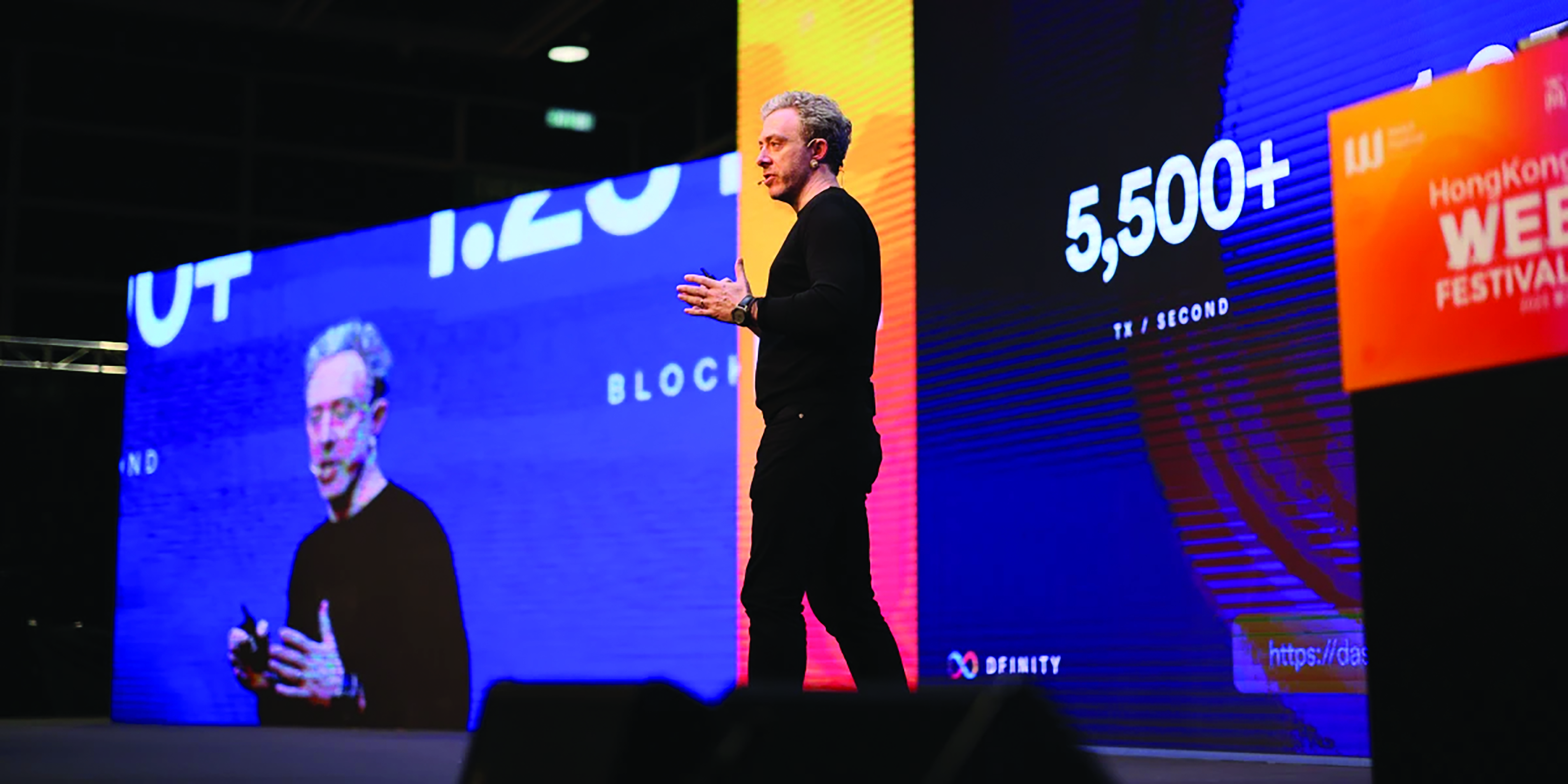
The Internet Computer runs "serverless" software that doesn’t depend on servers like databases, and is tamper-proof, which means hosted services are immune to cyber attacks on infrastructure, and always-on, because the network redundantly replicates their computations and data across data centers in the background, making them incredibly resilient. DFINITY argues that this is exactly what the AI era demands. Because serverless software is simpler, AI agents can write it faster, and at lower cost, and the Internet Computer has also been designed to run the next generation of software called "AIware," which has AI on the inside.
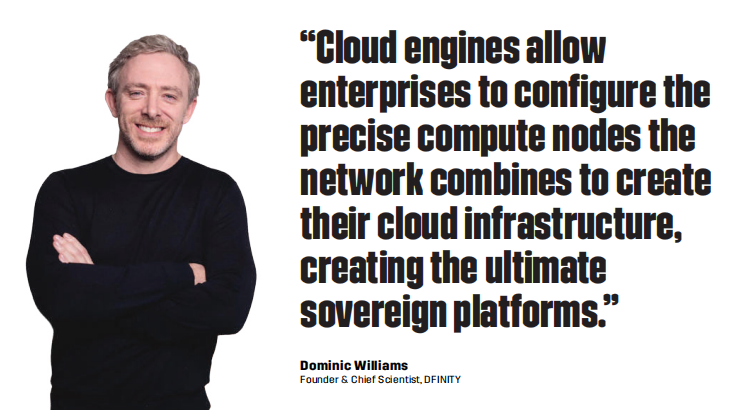
The Internet Computer provides a cloud platform by combining compute nodes that are installed in different data centers around the world using an open mathematical network protocol. Williams believes that a new addition to the Internet Computer, called “cloud engines,” is currently propelling the network into the mainstream by directly solving for sovereignty needs. He says that "cloud engines" allow enterprises to "configure the precise compute nodes the network combines to create their cloud infrastructure, creating the ultimate sovereign platforms,” and that “enterprises can change their configurations at any time, without interrupting or degrading hosted apps and services — providing complete freedom from vendor and location lock-in."
The team behind the Internet Computer says they aren’t anti Big Tech hyperscalers. Williams and his team argue instead that it simply provides an open evolution of cloud for an era in which enterprise is seeking sovereignty and new platforms that play better with AI: “In just a few clicks, enterprises can combine nodes from the Internet Computer’s marketplace to create new cloud engines. The marketplace includes hardware inside independent data centers, and virtual nodes running on hyperscaler clouds, and if those options don’t work, enterprises can combine on-prem nodes too — so ultimately the market will have to decide what’s most popular.” New engines can be created in minutes at opencloud.org.
What’s perhaps most impressive, is that the software running on cloud engines —which powers apps and services — runs independently of how they are set up. Once an enterprise has created a cloud engine, they can change its configuration without interrupting the software they are running there. Williams says, "for example, you can start off with a cloud engine that is backed by hyperscaler compute, then later change the configuration so that it’s backed by dedicated hardware running in home country data centers, without interrupting or even degrading the services you are running,” and that “this provides unprecedented freedom from vendor lock-in."
Some nation states have moved from experimenting with Internet Computer cloud engines to deploying them. Pakistan became the first nation state using cloud engines to combine locally-run hardware to create a nextgeneration sovereign cloud platform, led by the Pakistan Digital Authority, and is using them for a variety of needs. On the one hand, they are using their sovereign cloud to develop a cybersecure and resilient national chat platform, and on the other hand, they have used it in conjunction with the Caffeine app builder (caffeine.ai) to create internal government services, several of which are already live and in production. Sophisticated AIdriven development platforms such as Anthropic’s Claude Code and OpenAI’s Codex can also directly build and deploy secure apps and services on cloud engines.
In another recent partnership, the UNDP is using cloud engines for its own operations as well as working to deploy to country offices, governments and civil society organizations it supports, and the first UNDP cloud engine is already running for one of its country offices. Pierre Samaties, DFINITY’s Chief Business Officer, said: "Cloud engines are created from open source technology that is verifiably free of hidden foreign backdoors and kill switches, and engines host tamperproof apps that cannot be hacked into, which is a game-changer for large and developing countries alike. We’re seeing some interesting ideas, such as developing world nations asking about running cloud engines across hardware in their international embassies. Anything is possible."
Williams goes on to say, "Internet Computer cloud engines offer a solution to sovereignty needs, but they also play an equally important role providing a better compute platform for the AI era. AI-powered hackers are making traditional compute infrastructure increasingly insecure, which tamperproof software helps fix.
"Tamper-proof software is also useful when AI builds and updates services in the role of developer, which it can do at the speed of conversation today. On traditional stacks, which aren’t tamper-proof, security and sysadmin teams have to be kept in the loop, which dramatically slows things down in production."
Williams also talks about a new development coming called "Open SaaS" that reflects how he expects AIware will bring changes. He goes on to explain that Open SaaS aims to provide a free alternative to every SaaS service on earth that can be installed and operated on a cloud engine as easily as a phone app, and reimagines SaaS as AIware with intelligence on the inside. DFINITY is currently migrating away from all the traditional SaaS apps it used to run on, to apps from the Open SaaS suite, which he says are already delivering huge benefits. He goes on to say, “With Open SaaS, you spend more time in AI chat than using traditional screens. For example, you can say to AI ‘determine which PTO requests are overlapping in Customer Success, approve those that aren’t overlapping, and create emails asking personnel to change their dates for the others, giving priority to our most valuable employees.”
DFINITY says more announcements are imminent, and that governments and large enterprises interested in meeting the team should attend DFINITY’s 2027 "Sovereign Cloud" event at the World Economic Forum in Davos this February. However, Williams says that cloud engines are for every enterprise, big and small, and that "once cloud engines are in general release, I expect we’ll see the fastest growth in the startup sector, because startups are flexible and have a huge incentive to be smarter and more efficient." He also says that "network effects will drive rapid adoption of cloud engines because the serverless software they host is transparently interoperable with software on other cloud engines, subject to permissions, re-creating a key dynamic behind early internet growth."