Dubai AI Campus: The Institutional Bet to Make Dubai a Global AI Launchpad
26 October 2026•


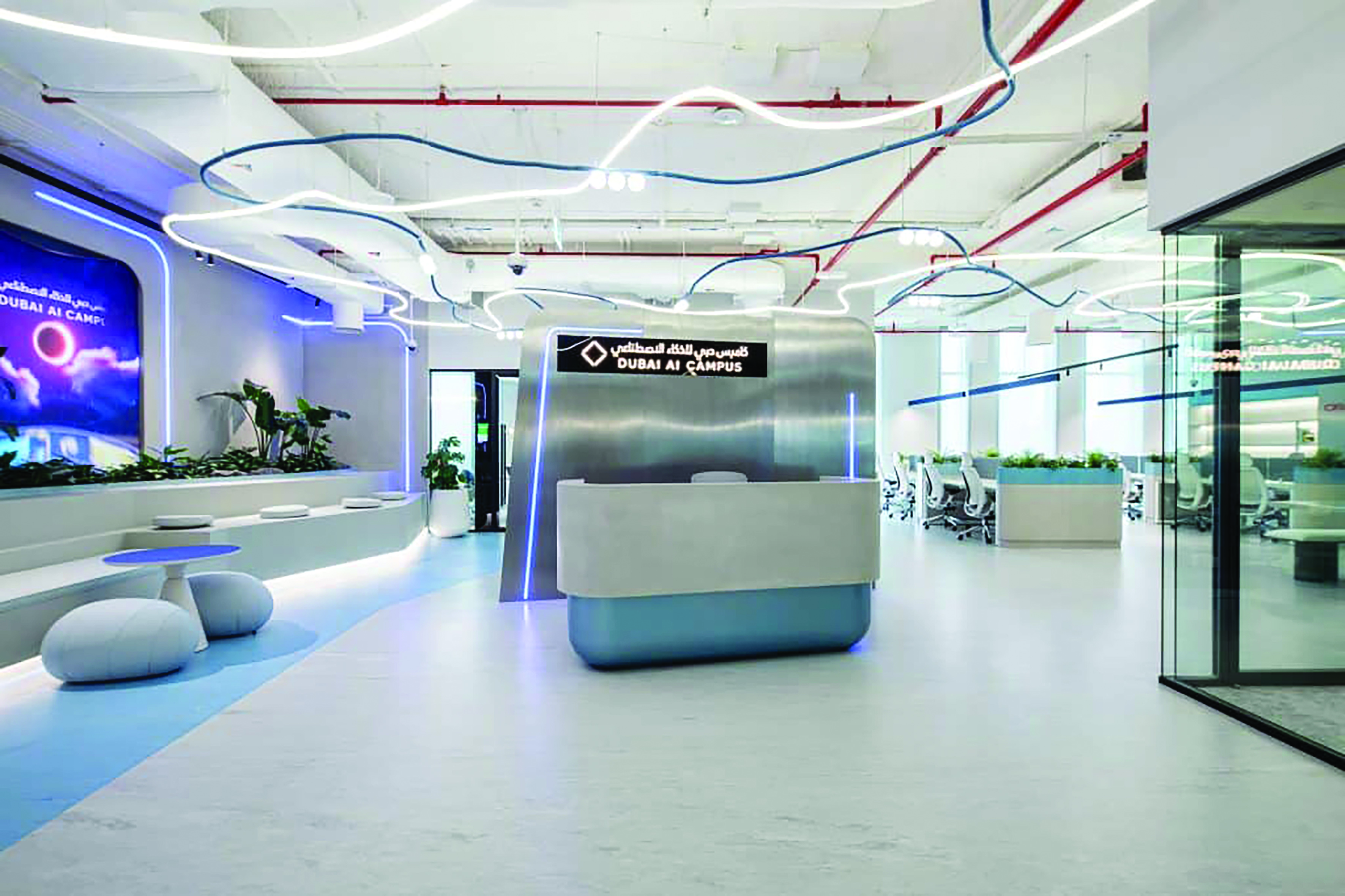
Artificial intelligence is no longer constrained by model capability. It is constrained by where it can scale. Dubai’s answer to that constraint is the Dubai AI Campus — a deliberate attempt to institutionalize AI inside a live economic system.
Launched within the Dubai International Financial Centre (DIFC) in May 2024, the Campus was designed not as another innovation cluster, but as applied AI infrastructure. Its ambition is clear: attract over 500 AI companies by 2028 (which it achieved 2 years ahead of schedule), and mobilize hundreds of millions in AI-related capital into and through Dubai.
The Campus aims to position Dubai as a global centre for applied AI, with a focus on translating innovation into practical deployment across the economy.
Globally, most AI hubs are either research-heavy or venture-driven. Few integrate regulation, capital, enterprise demand, and cross-border scalability in one environment. Dubai is attempting to compress that stack into a single platform.
Why DIFC Changes the Equation
Location is not incidental. At the end of H1 2026, DIFC was home to 10,018 active registered companies, up 30% year on year, operating under an independent English common law framework trusted by global investors. In H1 2026, its financial ecosystem included 1,134 regulated financial services firms, 327 banks and capital markets firms, and 592 wealth and asset managers, including the region’s highest concentration of hedge funds. Within that base, the number of AI, FinTech and innovation firms reached 1,933 in H1 2026, up 39 per cent year on year, and DIFC Innovation Hub welcomed 361 new companies in the first half of the year. For AI companies, that means immediate proximity to capital and enterprise clients — not theoretical access. “DIFC provides an institutional advantage, not just a location,” Alblooshi notes.
In a world where AI scale increasingly depends on regulatory clarity and capital intensity, operating inside a globally recognized legal and financial jurisdiction reduces friction in fundraising, structuring, and international expansion. This is infrastructure — not branding.
A Hybrid Ecosystem by Design
The Campus was intentionally built as a hybrid. Today it serves global AI firms entering the Middle East, UAE-based startups scaling internationally, and enterprises deploying AI solutions across regulated industries.
Global firms contribute technology and intellectual property, local startups bring agility and regional knowledge, and enterprises provide demand and practical use cases. Together, they create a foundation for commercial adoption. Early traction has been strongest in FinTech, climate and sustainability solutions, PropTech, enterprise productivity AI, and smart city and government applications. These sectors align closely with Dubai’s economic strengths in finance, infrastructure, logistics, and public-private collaboration.
The Campus is not trying to outbuild Silicon Valley on frontier models. It is embedding AI into sectors that already move capital and policy at scale.
Embedded Capital
One of the most underappreciated aspects of Dubai AI Campus is how deeply capital is integrated.
Investors — venture capital, corporate venture arms, sovereign and institutional funds — are not invited in occasionally. They are structurally embedded in the ecosystem through daily proximity, structured programs, and major platforms such as Dubai AI Festival.
“Investors are embedded into the ecosystem rather than engaged episodically.”
That reduces one of the biggest bottlenecks in AI scaling: timing. In many ecosystems, companies build first and seek capital later. In Dubai, the objective is simultaneity — company formation, capital access, regulatory clarity, and enterprise partnerships happening in parallel. The long-term ambition is not just company count. It is economic output. DIFC’s planned transformation into the world’s first AI-native financial centre is expected to generate USD 3.5 billion (AED 12.9 billion) in economic value and an anticipated 25,000 jobs.
Regulation as a Growth Lever
As global AI regulation tightens — from Europe’s AI Act to emerging governance frameworks in the U.S. and Asia — companies increasingly need compliant environments that still move quickly. Dubai’s model is regulated acceleration.
The Campus supports regulatory experimentation, policy dialogue, and real-world implementation feedback as governance frameworks evolve. This positioning matters. In 2026, the constraint on AI is no longer model intelligence. It is institutional integration: compliance, liability, cross-border data governance, and enterprise readiness. Dubai is betting that clarity beats chaos.
Dubai as a Launchpad — Not Just a Market
Dubai’s role in the global AI economy extends beyond its appeal as a regional market. For AI companies seeking international growth, the city offers a base from which to enter new markets, build cross-border partnerships, and scale globally.
That role builds on Dubai’s long-established position as a bridge between East and West. For decades, the city has connected Asia, Europe, and Africa through trade, logistics, capital flows, and financial services. AI is becoming the next layer of this international Network.
For companies operating in regulated sectors or requiring cross-border expansion into emerging markets, Dubai offers speed of setup, investor confidence, and enterprise access within a single jurisdiction. That orchestration is the point.
The Real Strategic Play
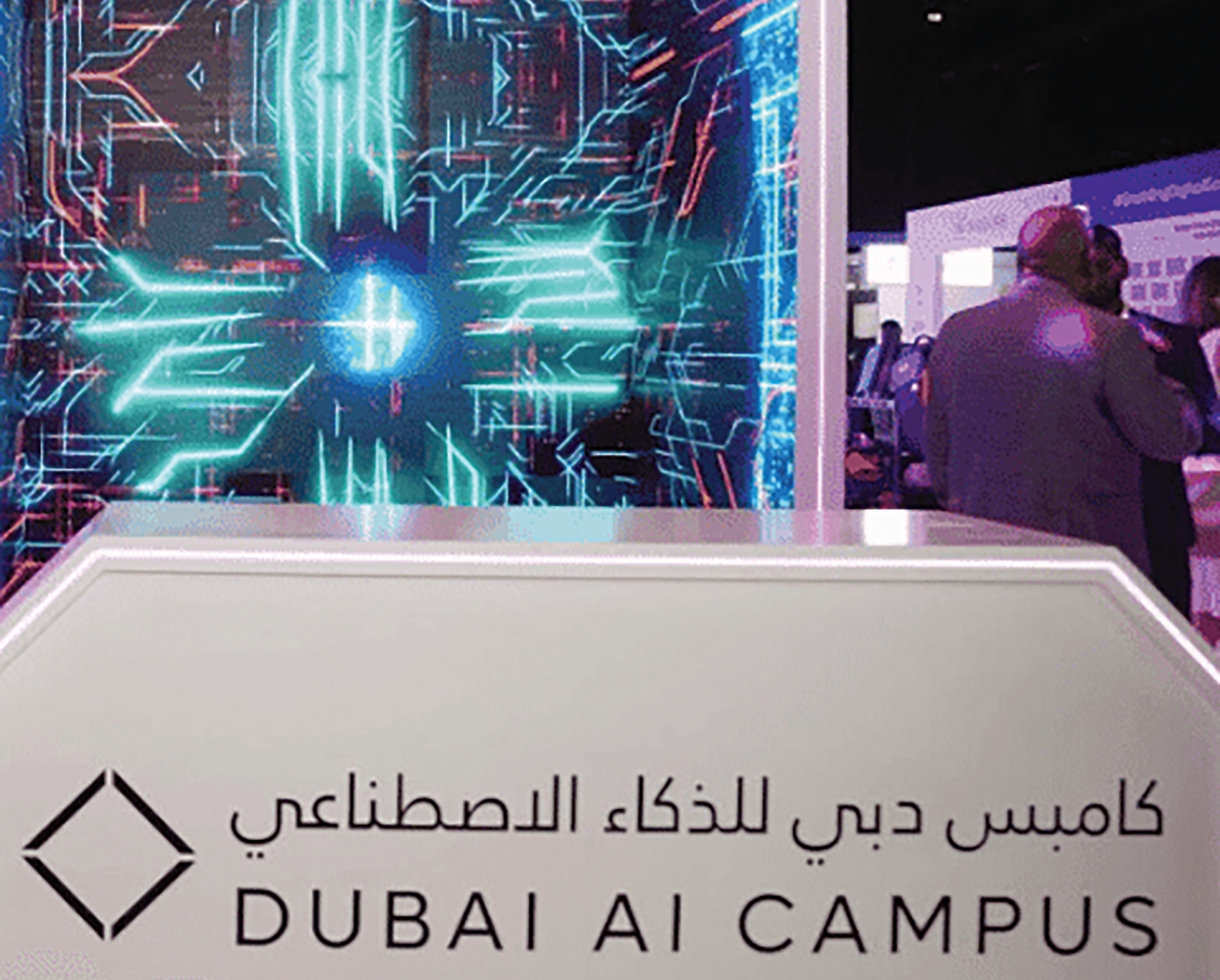
Dubai AI Campus is not competing on raw model training scale. It is not trying to dominate chip manufacturing or frontier lab research. Instead, it is positioning Dubai as a global scaling node in the AI economy — a place where companies formalize structure, raise capital, deploy into enterprise, and expand into high-growth markets.
If successful, by 2028 the Campus will not merely host 500 companies. It will embed AI into finance, climate systems, infrastructure, and governance — turning applied intelligence into economic export. In a world where frontier capability is consolidating among a handful of global players, smaller jurisdictions cannot win on compute. But they can win on orchestration.
Dubai’s bet is that orchestration — of capital, regulation, and enterprise demand — is the next competitive frontier. If that thesis proves right, Dubai AI Campus will be less a hub and more a hinge point in the global AI economy.
Discover how Dubai is out-building global tech hubs and what this massive ecosystem shift means for founders and investors in The State of AI 2026.