
The GCC Is Funding Startups. Europe Is Funding Champions. The Difference Will Define the Next Decade.
29 June 2026•
%2Fuploads%2Fopinions%2FOpinions%2520Covers_erika.jpg&w=3840&q=75)
Three quarters of all late-stage venture capital deployed in MENA last year came from outside the region. Not a majority. Three quarters. That single number tells you everything about where the GCC's startup story is heading — and what is still missing from it.
Over the past decade, the Gulf has built one of the world's fastest-growing startup ecosystems largely from scratch. Saudi Arabia and the UAE now rank among the most active venture markets across emerging economies. Founders are building globally relevant companies across fintech, AI, logistics, healthcare, and enterprise software at a pace that would have been unimaginable ten years ago. And the capital base underwriting all of this is staggering: GCC sovereign wealth funds now collectively manage more than $5 trillion in assets — roughly 40% of all sovereign wealth on earth.
And yet, when a GCC-born company reaches the stage where it needs $50 million, $100 million, or $250 million to become a global category leader, it almost always has to look abroad to find it. This is the structural weakness that everything else depends on solving.
Europe’s Solution

The European Tech Champions Initiative — a fund-of-funds backed by the EIB Group and six EU member states — has already committed €3.9 billion to support growth-stage European technology companies, targeting the mobilisation of over €20 billion in total investment. Its second generation, ETCI 2.0, is now fundraising with an even more ambitious target: €15 to €20 billion in committed capital, designed to unlock up to €80 billion in investments in Europe's most promising scale-ups.
Meanwhile in the UK, the Mansion House reforms have mobilised seventeen of the country's largest pension providers to commit at least five percent of their default funds to productive domestic assets — an initiative expected to unlock more than £50 billion by the end of the decade. The British Business Bank's new British Growth Partnership is already investing this capital into high-growth UK companies, with at least £2 billion in further pension commitments targeted over the next five years.
The logic behind each of these initiatives is identical: ecosystems do not become globally competitive simply by creating startups. They become globally competitive by retaining ownership of their future champions.
The GCC Gap
Consider what the numbers actually show. The total venture capital deployed across all of MENA in 2025 was approximately $3.8 billion of equity (with an additional $4 billion in debt raises) — roughly the size of a single large Series C round in the US. In that same year, at the late stage specifically, international investors supplied 75 cents of every dollar invested, the highest share ever recorded. The region's earliest investors — its seed funds, its family offices, its domestic VCs — are doing their job. They are finding the companies. They are backing them early. And then, at the moment those companies begin to become genuinely valuable, foreign capital takes the wheel.
Fresha is the story told in miniature. Founded in the UAE in 2015 by William Zeqiri, the company built a subscription-free booking, payments, and business management platform for the global beauty and wellness industry — today used by over 130,000 salons, spas, and barbershops across 120 countries. Regional venture firms MEVP and BECO Capital backed it early, seeing its potential before anyone in New York or London was paying attention. But as the company scaled, so did its dependence on international capital: Partech, General Atlantic, JP Morgan, and ultimately KKR, which led the $80 million round that made Fresha a unicorn in May 2026. Today Fresha is headquartered in London. The Gulf created the founder, but one could argue that it was international capital that funded the company into global relevance.
Property Finder tells a different version of the same story. Founded in Dubai in 2007, the company has remained headquartered in the UAE and grown into one of the region's most valuable technology businesses — the UAE's largest online real estate marketplace. Yet its transformative growth rounds were led by General Atlantic, which first backed the business in 2018, and ultimately a $525 million investment from Permira and Blackstone Growth in 2025 — the largest private equity inflow into a digital company in the region, and notably Permira's first-ever investment in the Middle East. The company proved world-class technology businesses can stay in the Gulf. It also demonstrated where the capital to build them continues to come from.
Neither story is a failure. Quite the opposite. Regional investors were indispensable in both cases. The Gulf created the founders, built the ecosystems, and produced companies capable of competing globally. The question is whether the Gulf is content to keep handing over the chapter that matters most.
Future Proofing Entrepreneurship
When geopolitical uncertainty rises — as it periodically does across any region — international investors retrench, risk appetite contracts, and growth-stage capital flows slow or stop. Companies that are dependent on foreign funding cycles are not companies with long-term strategic independence. The GCC's Vision 2030 agendas, its AI ambitions, its diversification targets: all of them rest, at some point, on companies being able to raise growth capital from somewhere that is not subject to the sentiment swings of a fund manager in Boston or a pension committee in London.
The good news is that the fundamental ingredients are already here for a solution. The GCC has sovereign wealth funds of unmatched scale. It has a maturing network of family offices, regional institutional investors, and increasingly sophisticated public markets. Most importantly, it now has founders capable of building globally competitive businesses. What it lacks is a coordinated vehicle for deploying growth capital into them at the stage when it matters most.
The model to follow exists. Europe designed ETCI by pooling commitments from six member states and the EIB Group, creating a fund-of-funds large enough to lead mega-rounds and attract private institutional co-investment alongside public capital. The UK built the British Growth Partnership by mobilising pension funds as LPs in a government-anchored vehicle.
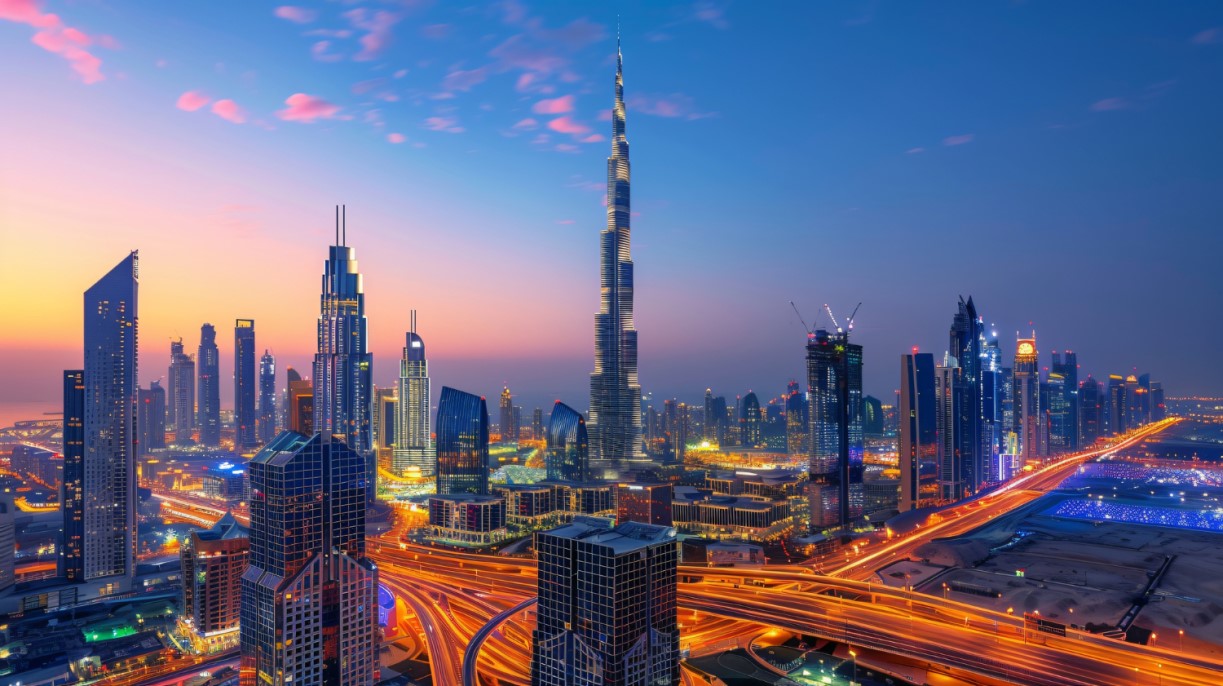
A pan-GCC Growth Fund, backed by sovereign capital from Saudi Arabia, the UAE, Qatar, Kuwait, Bahrain, and Oman, alongside regional pension funds, development institutions, and leading family offices, could do the same. It would need a mandate to lead $100 million, $250 million, and $500 million rounds. It would need the scale to keep the GCC's most ambitious companies from having to look abroad for the next chapter of their growth. And it would need the governance and commercial independence to operate as a credible institutional investor, not a policy instrument.
The GCC's leaders, at the Public Investment Fund, at Mubadala, at QIA, at the region's central banks and development authorities, have built sophisticated institutions capable of exactly this kind of coordination. They have demonstrated the ambition. The question is not whether the Gulf can afford to build a regional growth fund; it already manages $5 trillion. The question is whether it can afford not to.
The next phase of economic transformation in the Gulf will not be defined by whether the region can produce startups. It has already proven that it can. It will be defined by whether the companies built here, by founders from here, become global champions that are owned, funded, and headquartered here — through boom cycles and downturns alike. The founders have already done their part. Now the capital architecture needs to catch up.

%2Fuploads%2Fdubai-startup-guide-2025%2Fcover%2520dcde%2520startup%2520guide%25202025.jpg&w=3840&q=75)