
The State of Unicorns in the World in 2026
14 April 2026•
%2Fuploads%2Fturkey-unicorn-2026%2Farticles%2Funicorns-state-cover.jpg&w=3840&q=75)
Over a decade ago, the term “unicorn” was coined to describe a rare startup valued at over $1 billion. Today, unicorns are no longer mythical creatures. They are a central feature of the global innovation economy, shaping investment flows, national technology strategies, and the future of entire industries.
According to the World Intellectual Property Organization (WIPO), the world counted approximately 1,290 unicorn companies in 2025, collectively valued at over $5.2 trillion.
When venture capitalist Aileen Lee first popularized the term “unicorn” in 2013, there were just 39 known unicorn startups in the United States. Fast forward to March 2026 and the number has grown to over 1,330 globally.
Even more striking: while the number of unicorns has grown roughly 30× over the past decade, Their combined value has expanded even faster, reaching nearly $7 trillion, according to Lucidity Insights latest research. Unicorns are no longer rare outliers—they are now pillars of the global tech economy. That figure represents one of the largest concentrations of private technology value ever recorded, rivaling the GDP of some major economies.
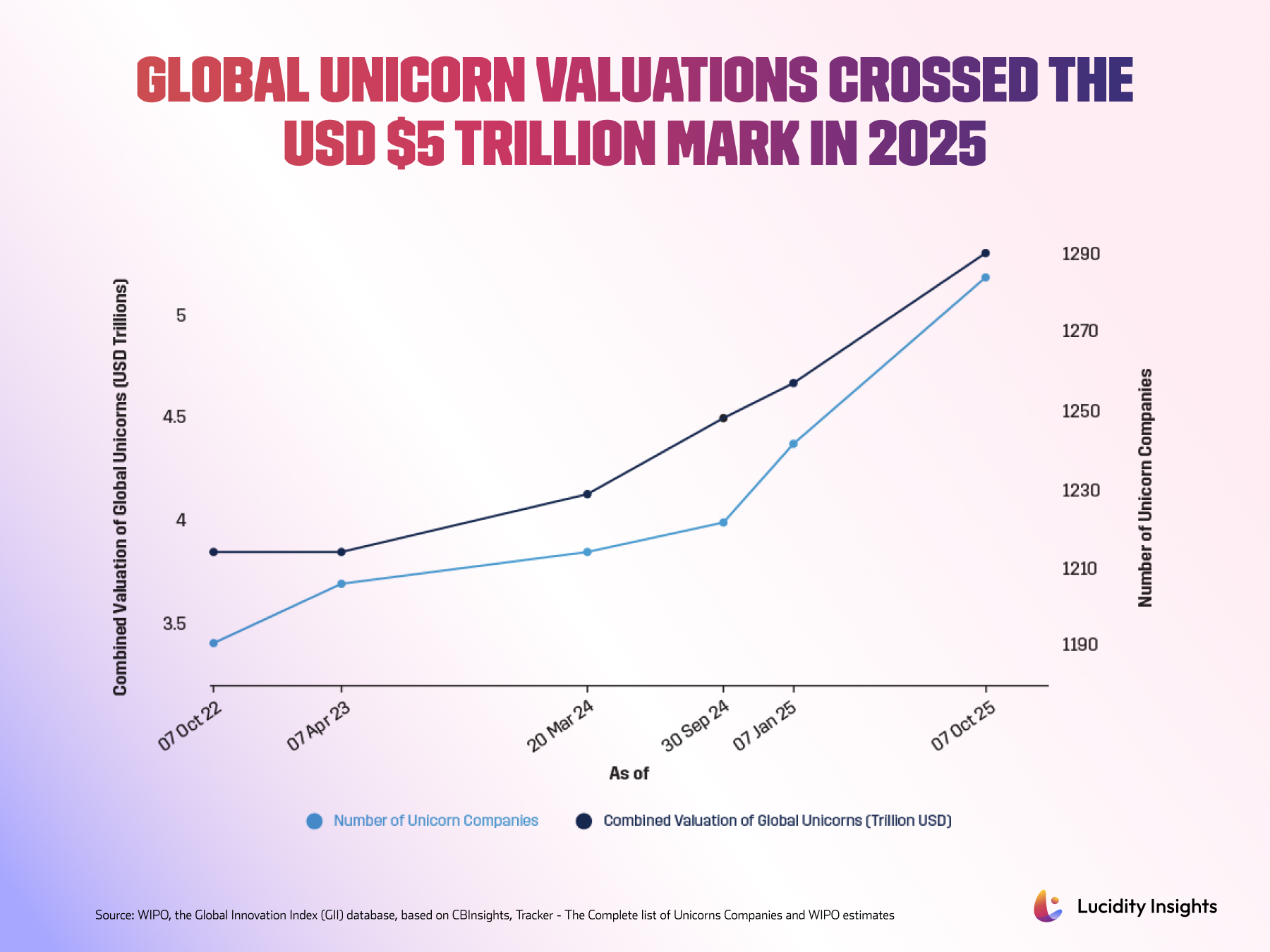
Between 2022 and 2025, the global unicorn herd expanded modestly—from roughly 1,191 to 1,290 companies—yet the total value
of unicorn companies surged from $3.8 trillion to $5.2 trillion. In just a handful of months, that $5.2 trillion has ballooned to
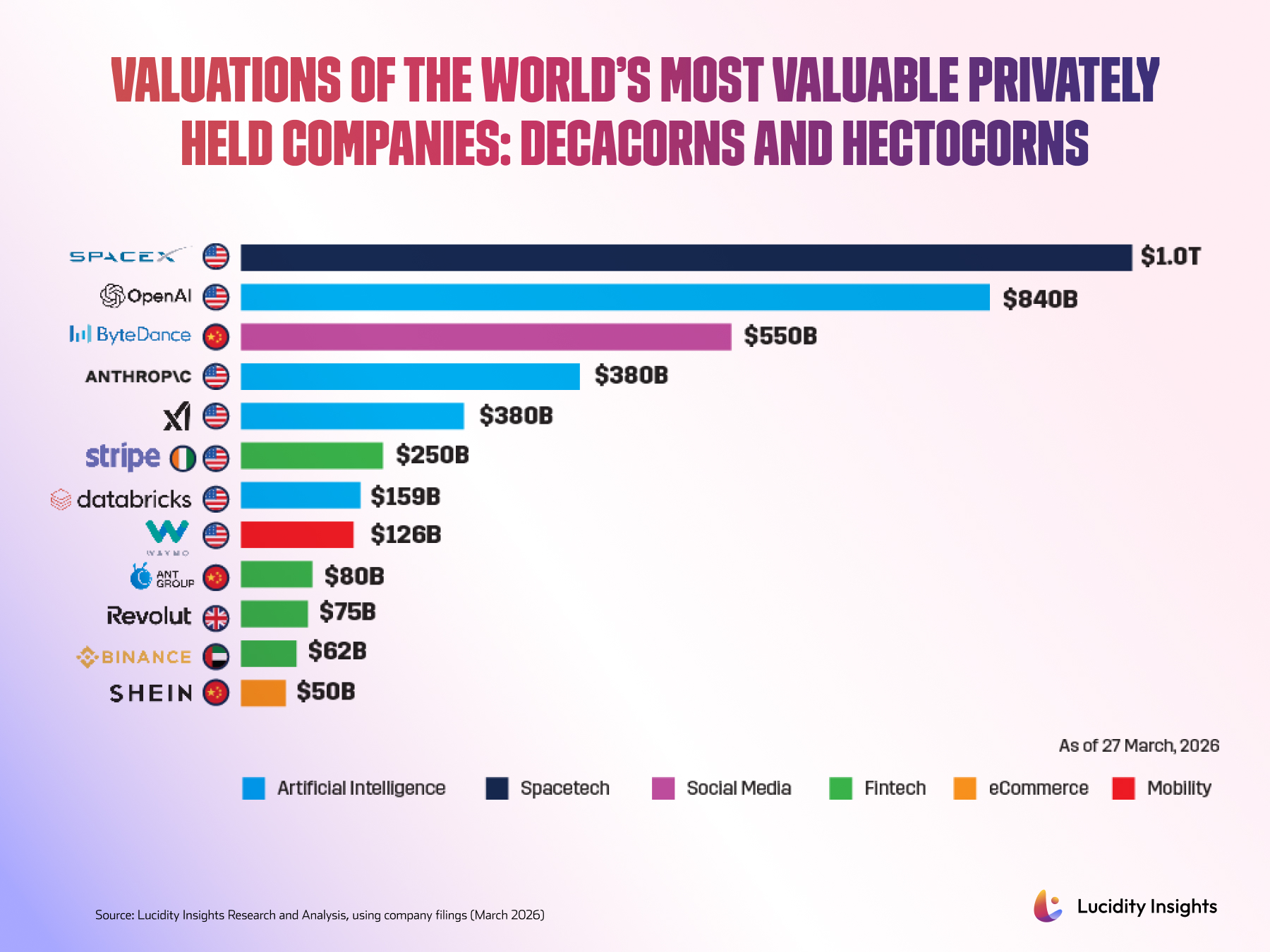
nearly $7 trillion, with SpaceX becoming the first company to be valued at $1 trillion in the early 2026.
In other words, unicorns are not just multiplying. They are getting dramatically bigger.
This trend reflects the emergence of a new category of startups: decacorns and hectocorns — companies valued at over $10 billion and $100 billion, respectively. Many of today’s most influential technology firms, particularly in artificial intelligence, cloud infrastructure, and digital platforms, now sit firmly in these categories.
Countries Producing the Most Unicorns
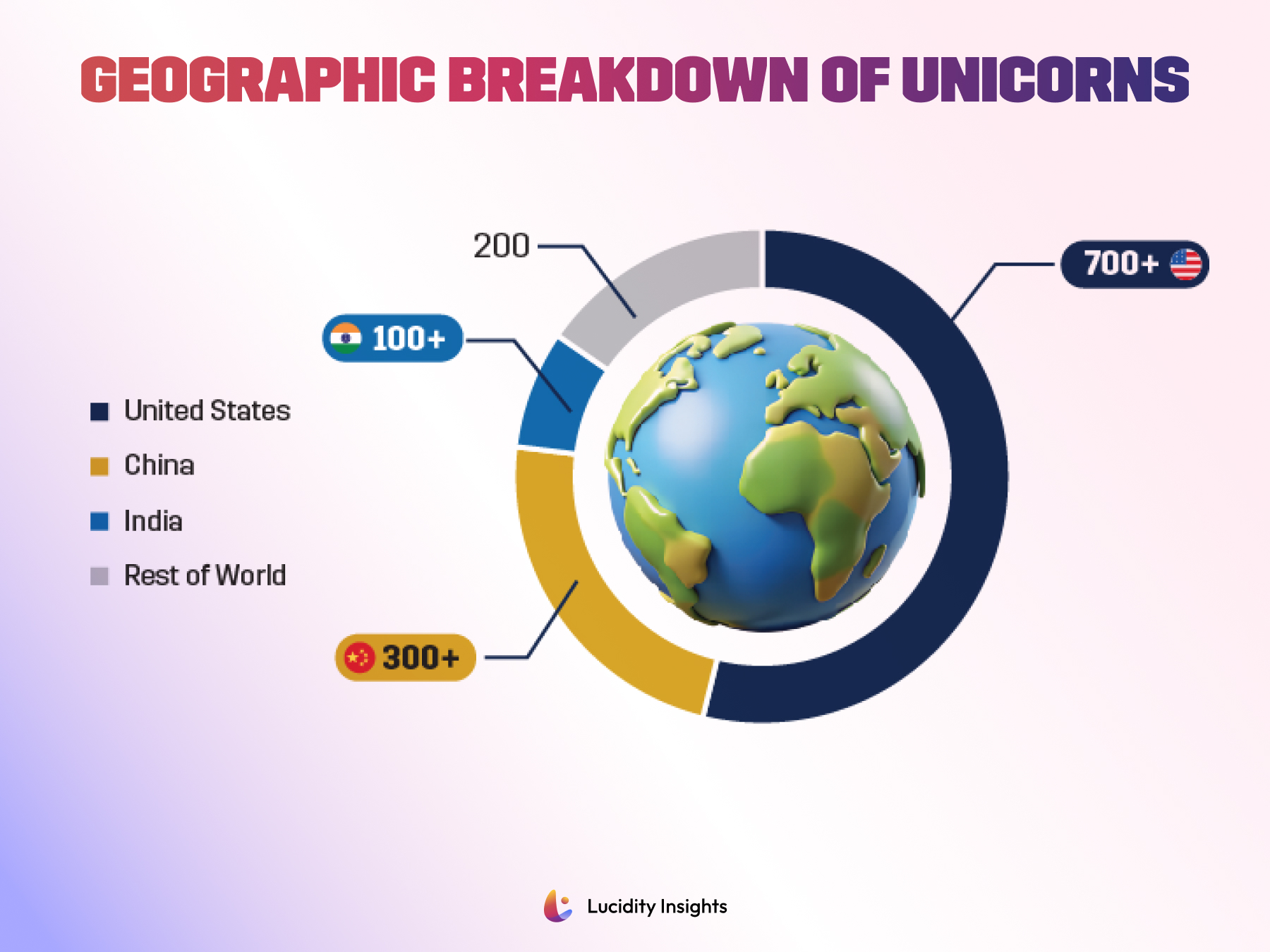
Unicorn creation remains highly concentrated geographically. According to WIPO’s analysis, three countries dominate the global unicorn landscape: the United States with approximately 700 unicorns, China with 300 unicorns, and India with 100 unicorns. Together, these three markets account for well over 80% of global unicorn value.
Yet the next phase of the unicorn story is increasingly global. Countries across the Middle East, Southeast Asia, Africa, and Eastern Europe are rapidly developing their own billion-dollar startups as capital and entrepreneurial talent spread beyond traditional tech hubs.
Time to Unicorn Status
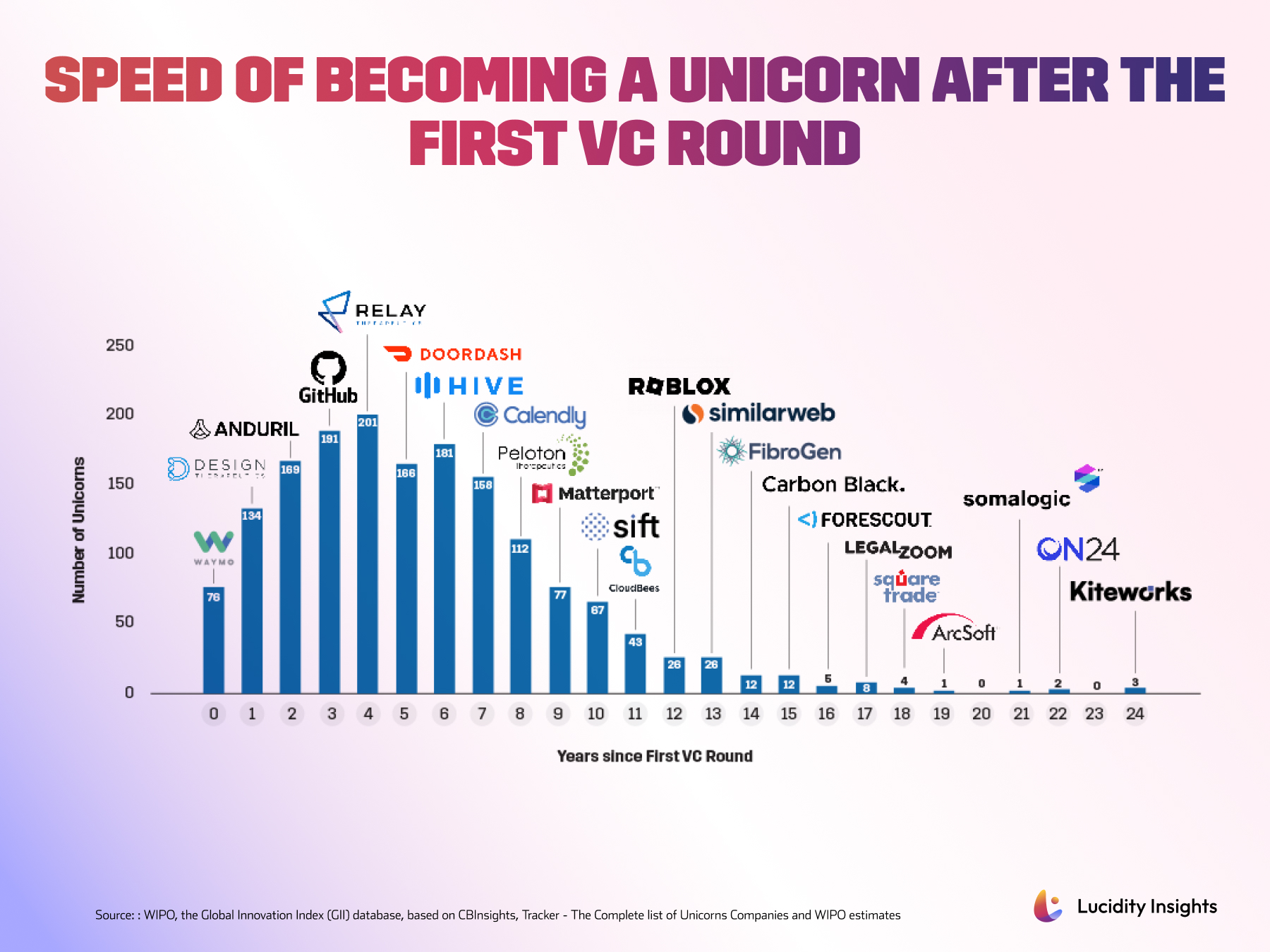
Historically, building a unicorn has taken about seven years on average.
But the speed is accelerating. AI-driven companies and deep technology startups are increasingly reaching unicorn status in five years or less, fueled by massive capital inflows, global digital markets, and the scalability of software platforms.
This shift reflects a fundamental change in how quickly technology companies can scale. A startup today can deploy globally, acquire millions of users, and raise hundreds of millions in capital within just a few years of founding.
Across the Middle East, Africa and Turkey, the average time to unicorn is now just 4.6 years.
The Industries Creating Unicorns
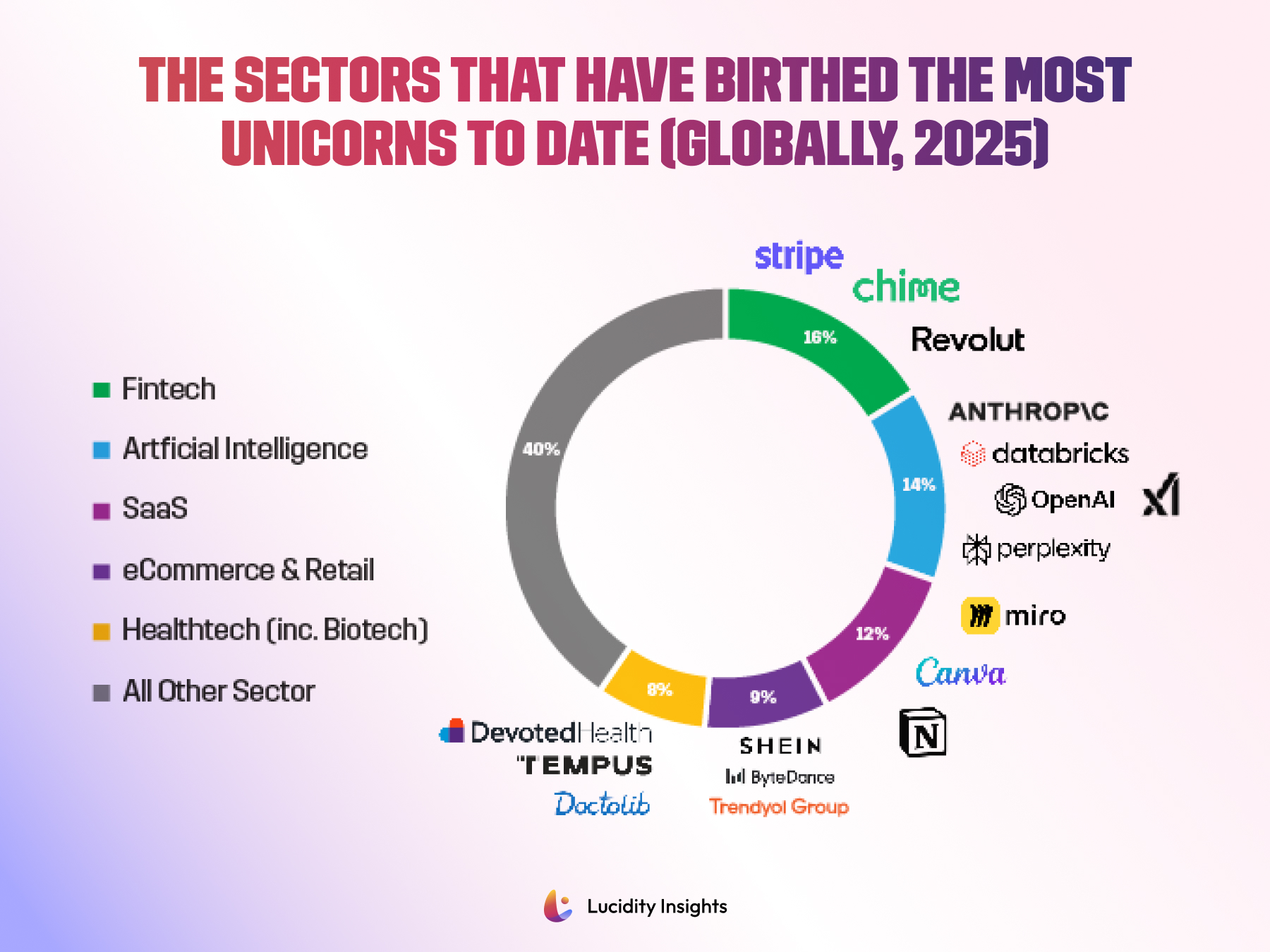
Unicorns are still overwhelmingly software-driven companies. Software can still have profit-margins above 50-90%, which is unheard of in most other industries.
The largest categories include:
-
FinTech
-
Artificial Intelligence
-
SaaS / Enterprise Software
-
E-commerce and marketplaces
-
Gaming and digital entertainment
Yet new sectors are beginning to emerge as unicorn producers—including climate technology, semiconductor innovation, biotech, and robotics—reflecting a broader shift toward deep technology startups solving complex global challenges.
The AI Effect: Faster Unicorns, Faster Obsolescence?
Artificial intelligence may fundamentally reshape the unicorn landscape over the next decade.
On one hand, AI dramatically lowers the cost of building software companies, enabling small teams to create products and scale globally faster than ever before. This could accelerate the creation of new unicorns.
On the other hand, AI also threatens existing software businesses whose products can be replicated or automated by new AI-driven platforms.
As a result, the future may see both faster unicorn creation and faster unicorn decline, as competition and technological disruption accelerate.
A Global Startup Arms Race
Ultimately, the unicorn economy is now part of a broader global race for innovation leadership. Countries increasingly view unicorns as strategic assets—signals that their ecosystems can produce globally competitive technology companies, attract venture capital, and generate high-value employment.
From Silicon Valley to Shenzhen, Bangalore to Istanbul, unicorns represent something deeper than billion-dollar valuations. They represent the ability of an ecosystem to repeatedly produce companies capable of shaping the global economy. And as the next generation of startups emerges—particularly in AI—the pace of unicorn creation may only accelerate.


%2Fuploads%2Fturkey-unicorn-2026%2Ftur26-new-cover2.jpg&w=3840&q=75)