MENA Startup Funding Doubled in Q3, So Why Are Founders Struggling to Raise
30 October 2026•

Startups across MENA raised $1.65 billion across 145 deals in the third quarter of 2026, according to Wamda, more than double the second quarter. It makes for a striking headline. But step back and look at the first nine months of the year, and a more nuanced picture emerges. The region has raised around $3.4 billion so far in 2026, ahead of every year since 2022 except 2025.
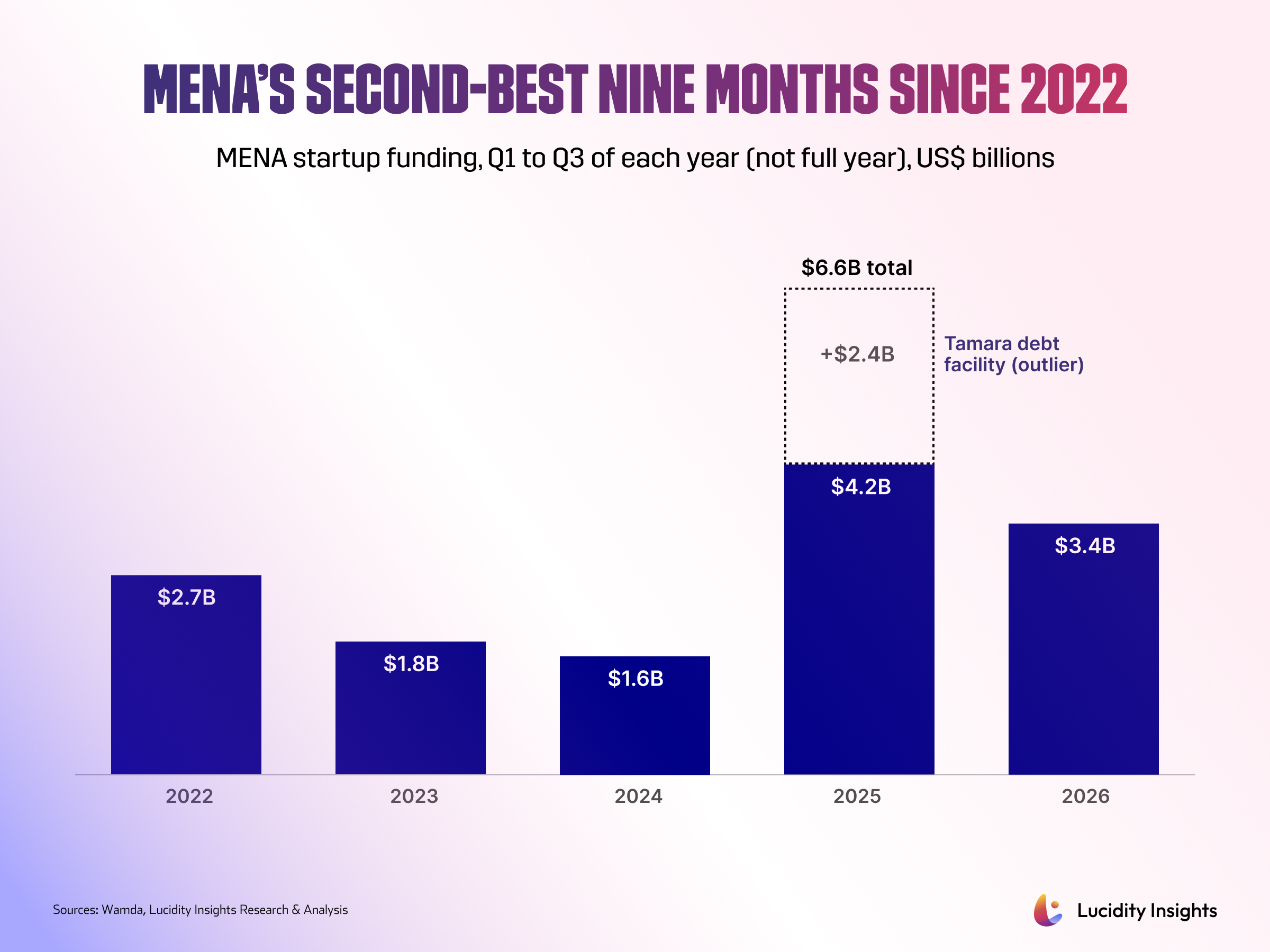
Even 2025's lead needs an asterisk. More than half of the $4.5 billion raised in the first nine months of 2025 came from a single deal: Tamara's $2.4 billion Shariah-compliant debt facility raised in Q3 2025. Set it aside, and this year's fundraising to date is only about 19% lower than last year's landmark year. More remarkable, though, is that despite the geopolitical conflicts in the region, Q3 2026 raised more than double the same quarter in a conflict-free 2024.
Why Q3 looks like a leap
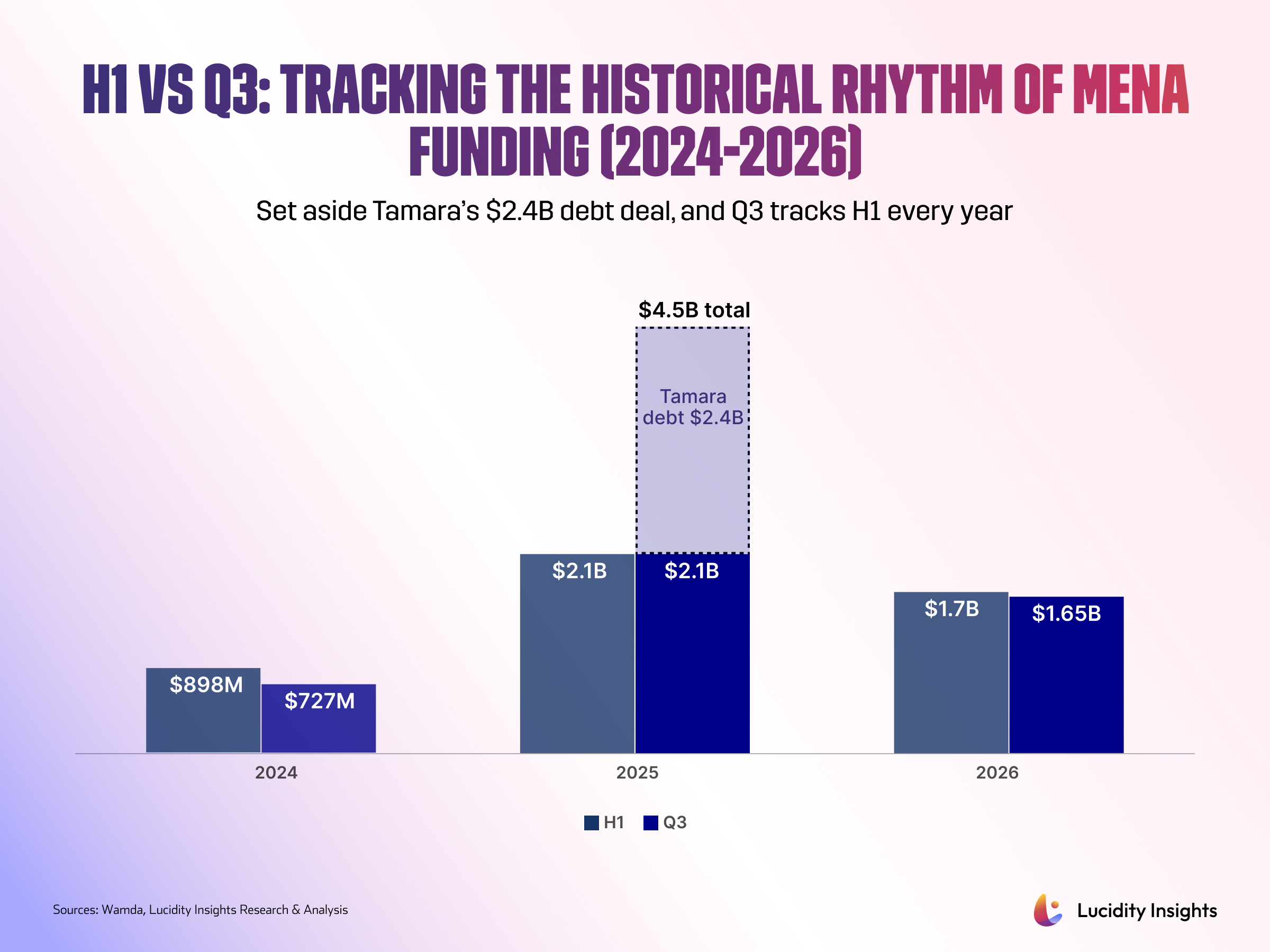
So why does Q3 look like such a leap? Some of the 108% jump on Q2 is simply the usual seasonal pattern for startup fundraising in the region. In 2024, Q3 raised $727 million against $898 million in the whole first half. In 2025, setting Tamara aside, Q3 matched the first half at about $2.1 billion. This year followed suit: $1.65 billion in Q3 against $1.7 billion in H1. The season pattern is that Q3 deals usually match the funding levels inked in the first half of each year.
Deal volume did rise 39% on the quarter, a genuine sign of life. It might be tempting to call Q3 a recovery, but it isn’t — at least not yet. It is a rebound from a low base, not a return to 2025’s highs. In my conversations with investors, most say they are active and busy, but they readily admit the bar has risen. Founders raising right now feel it most at seed and Series A, where rounds are taking longer and the due diligence questions are getting harder. The headline number is real. It just isn’t evenly shared.
Saudi Arabia wins Q3, but the UAE still leads the year
Q3 belonged to Saudi Arabia; Saudi startups raised around $1 billion across 62 deals, roughly 60% of the regional total and more than ten times their Q2 figure. The UAE came second with $507 million, and Egypt raised just $56.4 million. But one quarter doesn't make a year. Over the first nine months, the UAE has raised around $1.72 billion, against roughly $1.26 billion for Saudi Arabia. Egypt, the region's third-largest market, raised about $215 million over the same period, with its funding falling every quarter. Every other market combined, from Morocco and Bahrain to Jordan and Oman, raised less than $200 million across the first nine months of this year.
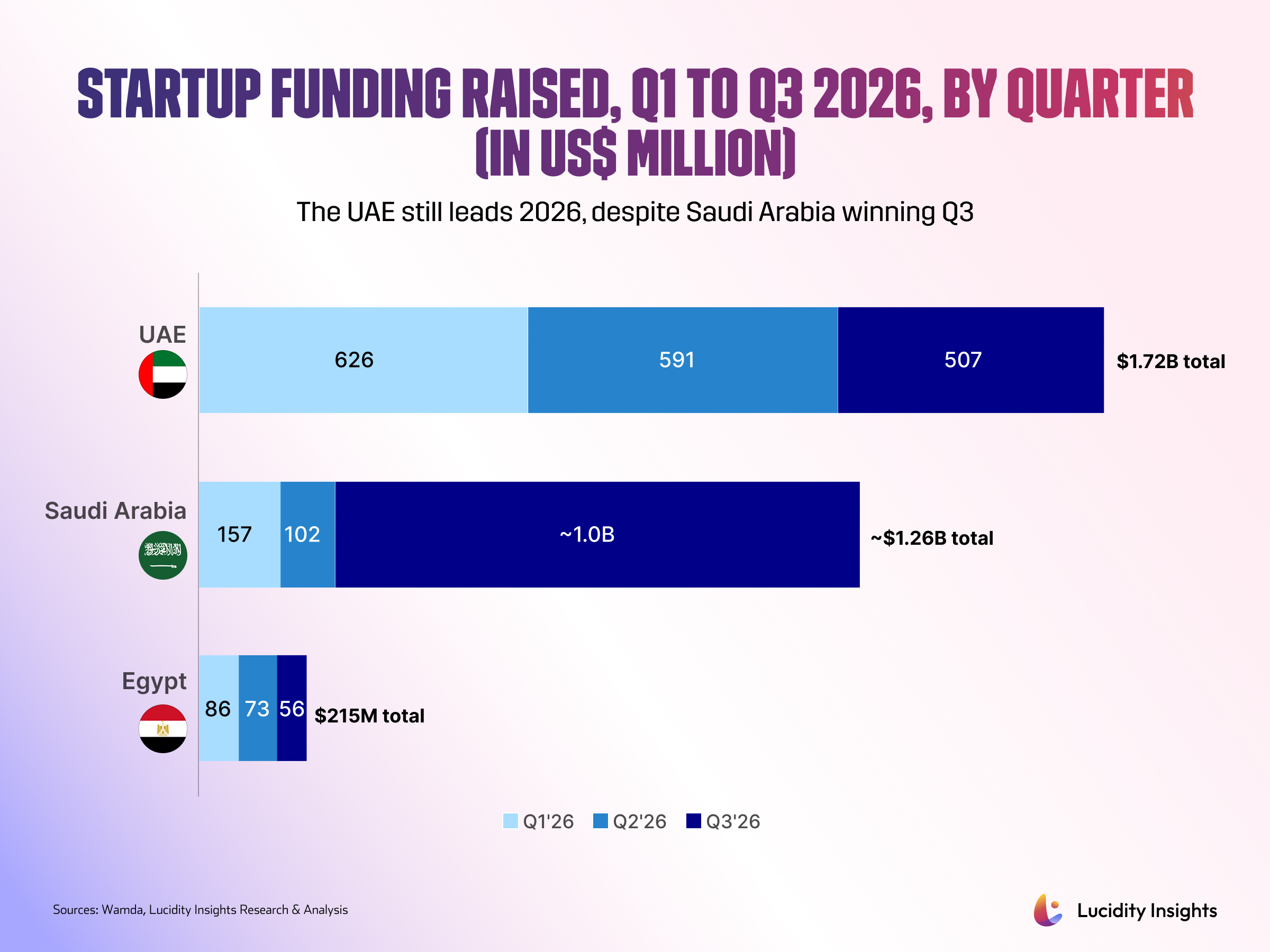
The difference is consistency. The UAE has raised more than $500 million in every quarter this year, while Saudi Arabia raised just $259 million in the whole first half before its Q3 surge. And more than half of Saudi's Q3 total came from two rounds: Barq's $329.5 million Series A and Tabby's $233 million Series F. That isn't a knock on the Kingdom's ecosystem, but it shows how one or two cheques can reshape a league table in a single quarter. The UAE remains the region's steadiest market. Saudi Arabia is the one to watch.
The catch: fewer, bigger bets
MAGNiTT recorded a record $813 million in mega-rounds of $100 million or more in Q3, with Moove's $250 million alongside Tabby and Barq. Meanwhile, early-stage deal count fell 45% year on year over the first nine months, and MAGNiTT counted just 214 deals in H1, the fewest since 2022. Capital isn't leaving MENA. It is concentrating in fewer, later-stage companies with proven revenue and clear paths to exit.
Fintech is still the region's favourite bet
Fintech raised $1.03 billion, 62% of all Q3 funding, helped by real local demand and regulatory sandboxes in Riyadh, Abu Dhabi and Dubai. For founders in deep tech, climate, health and the creative industries, the bar is higher and the timelines longer.
What this means for founders
Based on my conversations with investors in the region, a few things stand out. First, the money is there, but it is becoming increasingly selective. Expect deeper diligence and valuations tested against revenue, not narrative.
Second, Saudi Arabia matters. Despite the challenges the region currently faces, it is fast becoming a centre of gravity for growth capital, so a considered Saudi strategy is worth exploring and building out.
Third, plan for longer runways. With fewer seed and Series A deals closing, early revenue is your strongest negotiating tool.
Fourth, build lean with AI. Every investor I spoke to said the same thing: now is the time to build your business on AI tools, using them to drive growth without stretching your spend.
Finally, don't mistake a headline for a market. A healthy ecosystem is measured by how many companies raise their first and second rounds, not by the size of the biggest cheques.
Q3 proved MENA can still attract nine-figure conviction. The question for 2027 is whether that conviction trickles down to the founders building the next Tabby, or stays at the top.