
Saudi Arabia's Bold Bet on Electric Mobility: $50 Billion and a Vision for 2030
08 October 2025•
%2Fuploads%2Fev-2025%2Farticles%2Feviq-launch.jpg&w=3840&q=75)
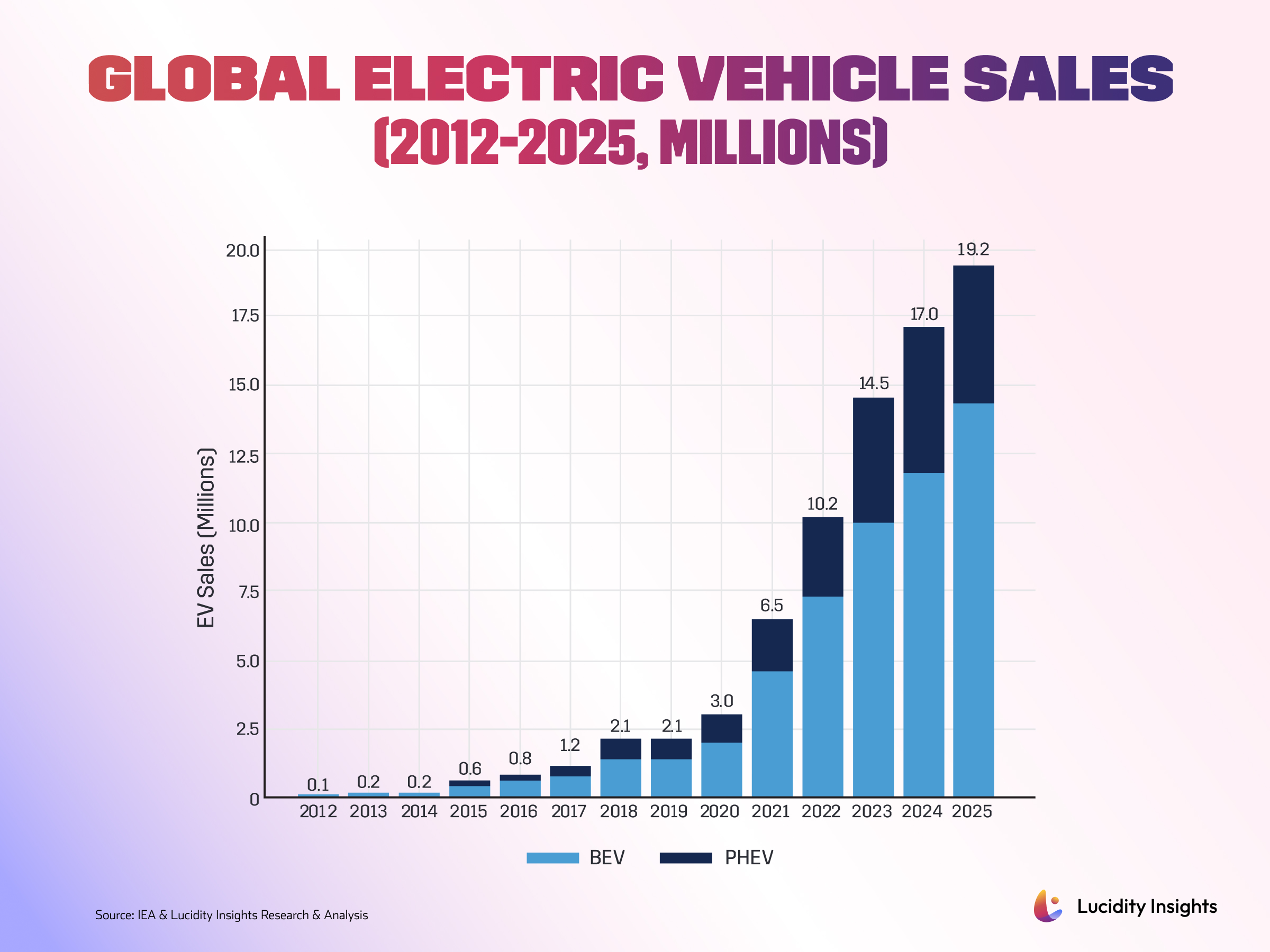
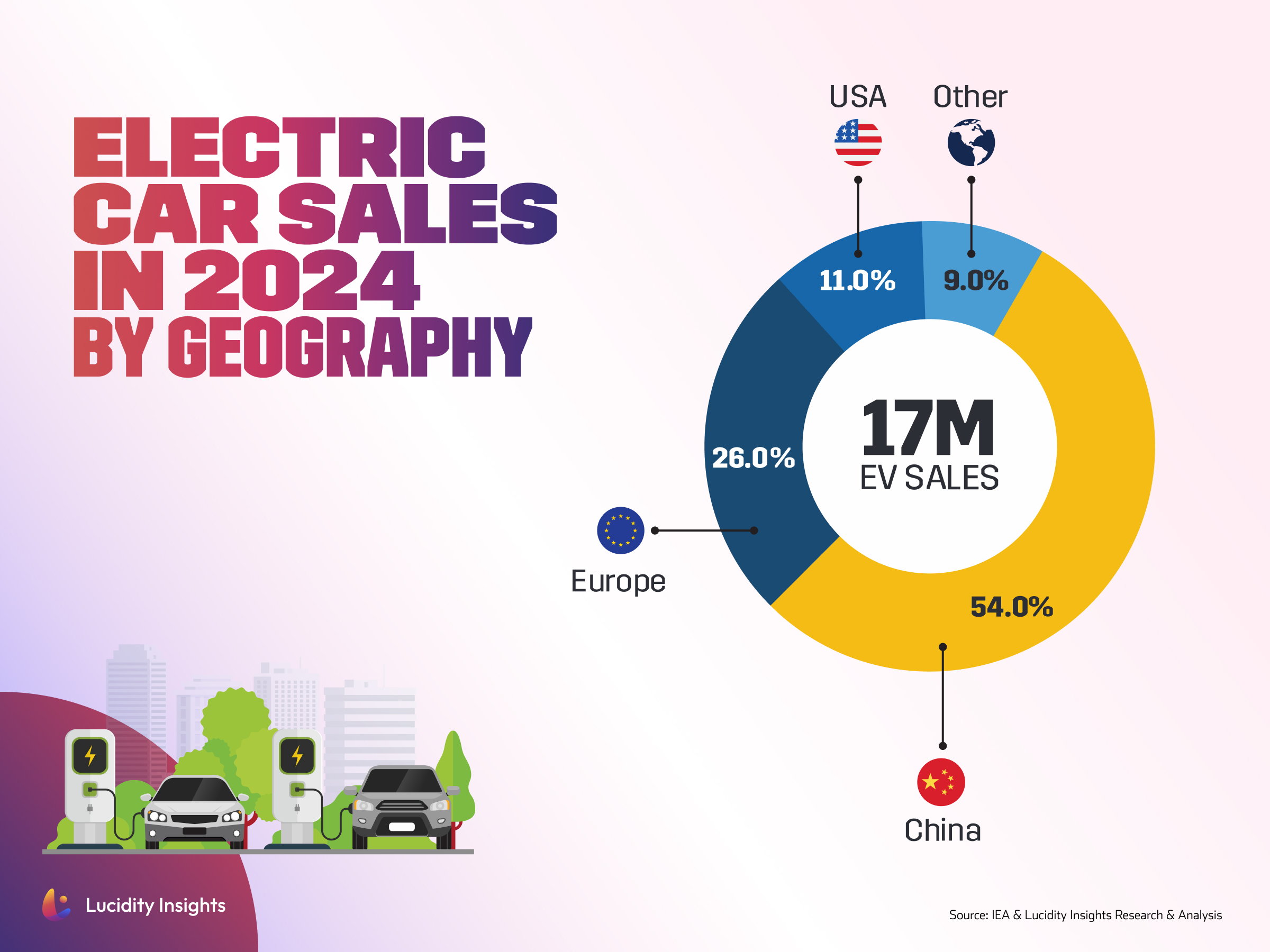
The global electric vehicle (EV) revolution has reached an inflection point having sold 17 million EVs around the world in 2024, and are on track to sell over 19 million EVs in 2025. Nearly 20% of all new cars sold worldwide in 2025 thus far have been electric, and in markets like China, that figure is already closer to 40%. While the electric mobility spotlight often shines on Silicon Valley or Shanghai, one of the most ambitious electric mobility transformations is currently unfolding in the heart of the Arabian Peninsula: in the Kingdom of Saudi Arabia.
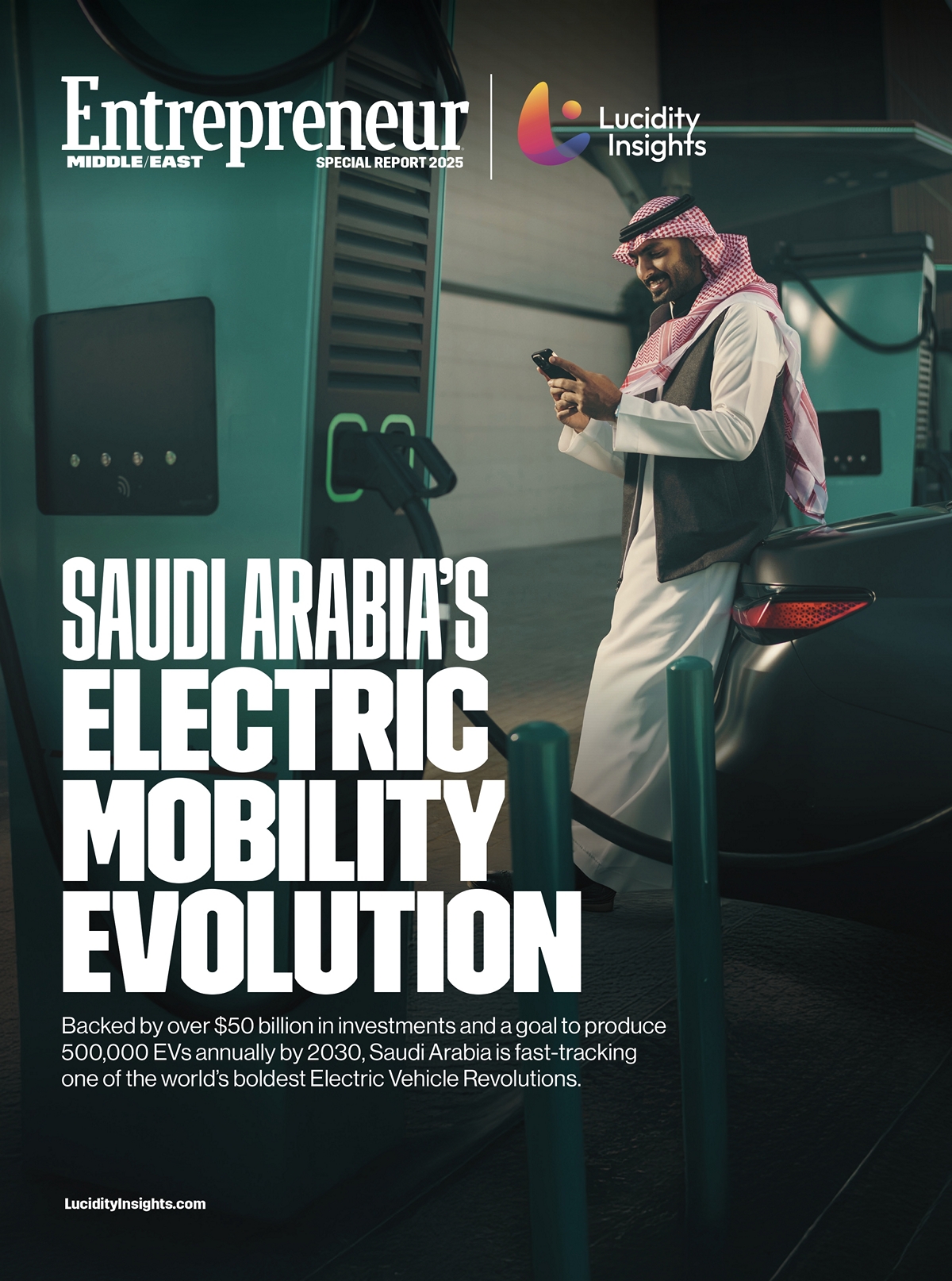
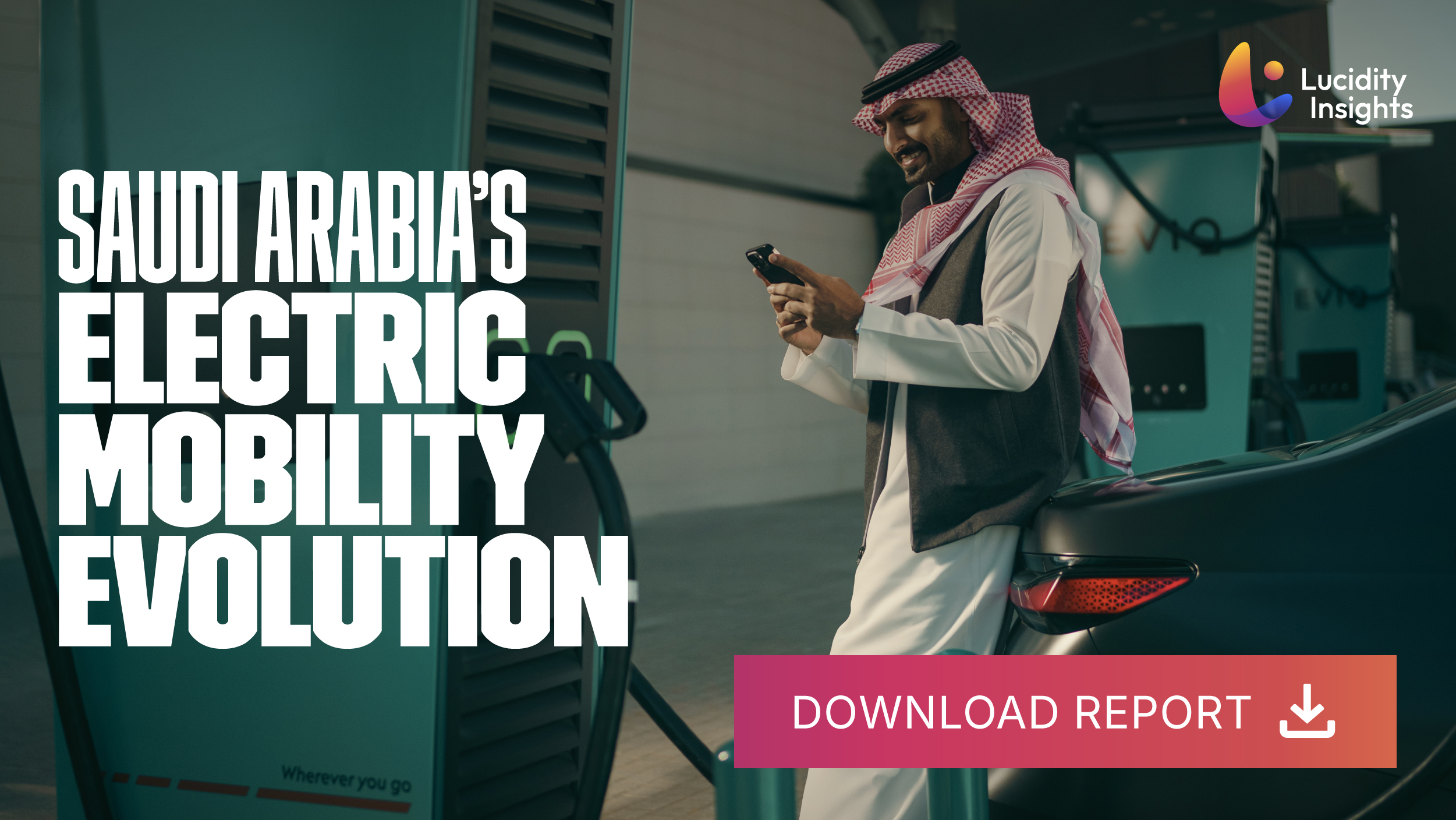
Lucidity Insights’ latest Special Report, published in partnership with Entrepreneur Middle East, titled Saudi Arabia’s Electric Mobility Evolution, reveals just how fast the Kingdom is moving. Backed by more than US $50 billion in sovereign wealth investments, Saudi Arabia is building an entire EV ecosystem from scratch—spanning electric vehicle manufacturing, charging infrastructure deployment, heat-resistant battery R&D, and an entire supply chain and mobility startup ecosystem. The goal? To produce 500,000 EVs annually by 2030 and put one million EVs on Saudi roads by the beginning of the next decade.
This is not just about cars—it’s about redefining the national economy. Under Vision 2030, Saudi Arabia is diversifying away from oil and targeting new industries to drive non-oil GDP. Electric mobility has emerged as a keystone of that transformation. Lucid Motors, now assembling vehicles at its AMP-2 facility in King Abdullah Economic City, is the first global EV brand to carry the “Made in Saudi” label. Meanwhile, Ceer Motors, Saudi’s first homegrown EV brand, is ramping up production with Foxconn and BMW technology. Meanwhile, global players like Tesla, Hyundai, and BYD are actively importing their electric vehicles into the market, with some in discussions about possible local manufacturing, underscoring Saudi Arabia’s emergence as a regional EV hub.
But production is only half the story. At the center of this revolution is EVIQ, the Kingdom’s national charging infrastructure company. EVIQ has been tasked with deploying 5,000 fast chargers across 1,000 locations by 2030—a monumental leap from just 130 fast chargers operating in the Kingdom today. This buildout is critical to overcoming consumer “range anxiety” and making EV adoption viable across Saudi Arabia’s vast highways and sprawling urban centers. This is no easy feat, as Saudi Arabia’s land mass is the 5th largest in Asia, approximately 1/4th the size of the United States of America, and 6 times the size of Germany.
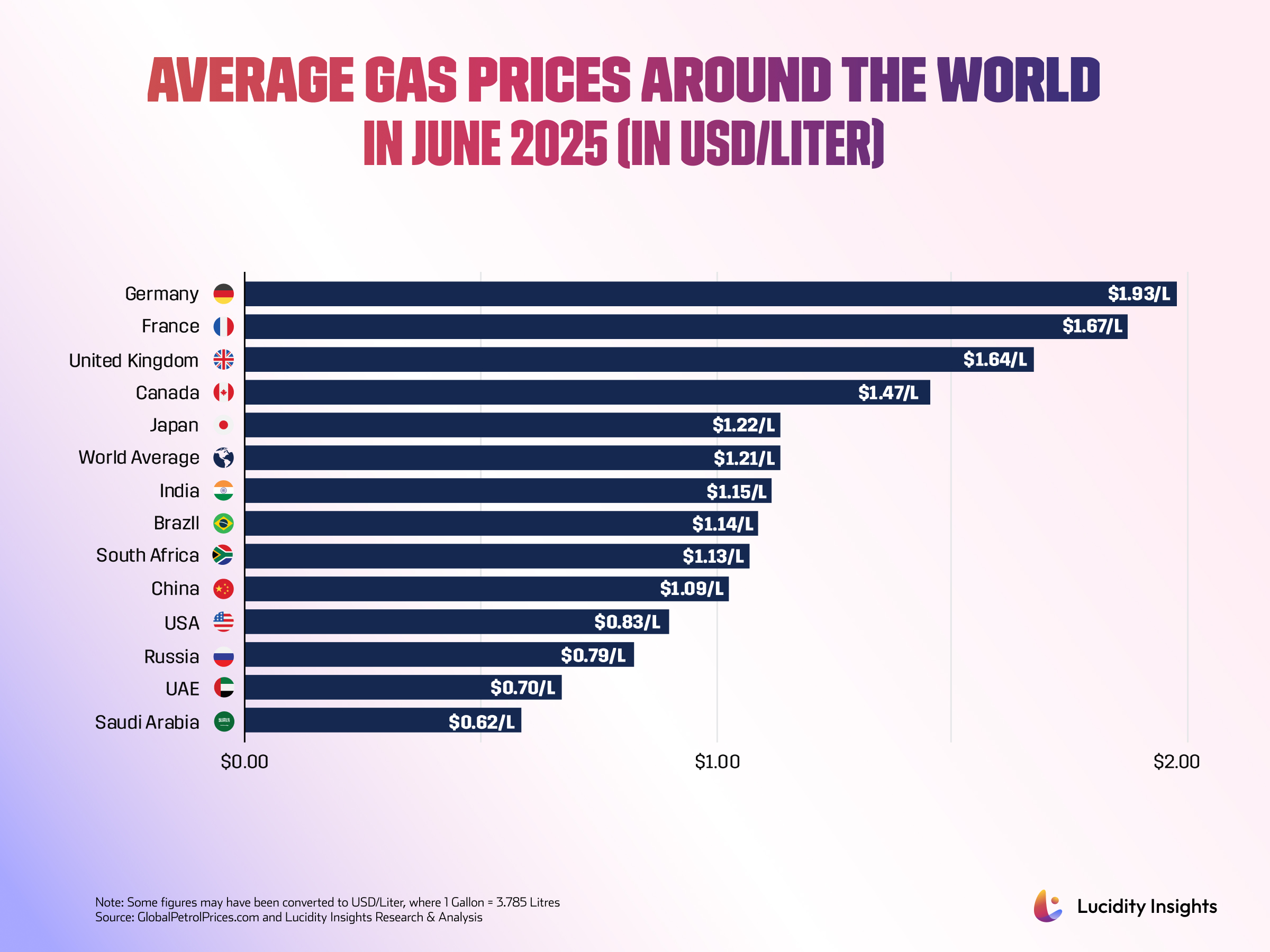
What might be most fascinating to watch, is the cultural shift involved in adopting electric vehicles; it may, in fact, be even more profound than the technological one. In a country where gasoline has long been synonymous with national pride and economic power, persuading consumers to plug in instead of fuel up is no small endeavor. Yet consumer sentiment is shifting. A recent survey highlighted in the report found that 97% of Saudis would consider purchasing an EV, with nearly half saying they plan to buy one in the next three years. What’s more, is that it is less of an economic decision, than anywhere else in the world, as Saudi Arabia has some of the lowest prices at the gas pump (see bar chart). Instead, EV adopters in the Kingdom are Saudi Arabia’s younger generation (under 45 years old), who identified themselves as tech-hungry and curious about innovation, supportive of the Kingdom’s Vision 2030, and concerned about the environment. To that effect, the Saudi Green Initiative aims to eliminate 278 million tons CO2 emissions by 2030, of which emission mitigation strategies across all sectors, including transport, will play a role, alongside renewable energy investments and energy efficiency initiatives, in a circular carbon economy approach.
Saudi Arabia is also addressing the unique challenges of its desert climate. Research partnerships between KAUST and Aramco are developing heat-resilient “hot batteries” capable of withstanding temperatures up to 130°C, while companies like BYD are adapting battery chemistries for Gulf conditions.
Currently, 1% of cars on the road are electric in the Kingdom, and though it is still early days, adoption is on the rise. With every greenfield growth story like this, there is also a growing ecosystem of startups looking to solve for new challenges and capitalize on opportunities presented. Companies like Current Power (charging solutions) and EVS (specialized EV maintenance) are scaling fast, building the connective tissue of this new mobility economy. These startups are proving that the EV revolution in Saudi Arabia isn’t just top-down—it’s grassroots as well.
The numbers are staggering: from just 23,000 EVs on Saudi roads today to a projected 1 million within the next decade; from oil dependence to battery innovation; from importing vehicles to exporting “Made in Saudi” EVs across the region and the world. Saudi Arabia’s electric mobility push is no longer just a vision—it’s execution in real time. For entrepreneurs, investors, and industry leaders, the Kingdom is becoming one of the most important electric mobility markets to watch.
Download the full report, Saudi Arabia’s Electric Mobility Evolution, at lucidityinsights.com to explore the data, infographics, and insights behind this transformation.

%2Fuploads%2Fev-2025%2Fcover27.jpg&w=3840&q=75)