What Jensen Huang's Resignation Means for the Middle East's AI Ambitions
16 November 2026•

Key takeaways
- Jensen Huang, who personally championed Nvidia's biggest Gulf deals, has resigned as CEO. Nvidia says its customer commitments continue, and HUMAIN and G42 have not commented publicly.
- The immediate risk to the region is not chip supply. It is US policy, as both parties in Congress push to tighten chip export controls.
- The UAE, with its privileged US export status, is better placed than Saudi Arabia. But Gulf capital is exposed twice: through Nvidia's chips and through the AI companies Nvidia has financed.
Join Lucidity Insights' WhatsApp channel for the latest updates. Click here.
The Man Who Sold the Gulf on AI is Gone
For the Gulf, Jensen Huang was never just a chip supplier. He was the industry's most persuasive advocate for sovereign AI, and a familiar face when the region's landmark AI deals were announced. On Nvidia's earnings call a year ago, he name-checked Saudi Arabia's HUMAIN three times.
Nvidia's board accepted his resignation on November 11, and the company announced it on November 12. Prominent Gulf business figures had already weighed in. Saudi investor Prince Khaled bin Alwaleed posted on X that firing Huang "would be the dumbest thing they've ever done." Speaking at Bloomberg Invest in Dubai, Damac founder Hussain Sajwani said that if Huang were forced out, it would be "a big loss for the world."
The region's AI companies have not commented. Nvidia's new leadership has told customers and governments that the business carries on as before, and South Korea publicly confirmed its supply deal the next day. HUMAIN and G42 have made no public statement.
How it Unravelled
The fall was fast. On November 8, Huang admitted to an extramarital affair in an email to staff. The woman, Alice Huang, was an executive at Megaspeed, a Singapore-based Nvidia partner that US officials suspect of helping smuggle restricted chips into China. US officials allege she is linked to Chinese intelligence. She has not been charged, and China calls the claims smears. Reports followed of a second relationship, with an Nvidia executive who reported to him. President Trump had publicly backed Huang earlier that week. Days later, he was gone.
Almost nobody saw it coming. Days before, tech analyst Dan Ives put the odds of Huang's removal at about 15%, called him "irreplaceable" and warned that an exit could wipe 25% to 30% off Nvidia's value. In the end, the shares plunged more than 13% at the open on November 12, falling below $150 for the first time since June 2025, then pared losses to close down more than 4%. They fell more than 2% the next day.
Two caveats matter. First, the stock was already sliding: it had lost 23.5% between its October 6 peak and November 5 in a broad AI sell-off. Second, some analysts argue the damage is contained. Huang's vision, says Creative Strategies' Ben Bajarin, "is already built into Nvidia's roadmap, its supply chain and its people."
Who runs Nvidia now
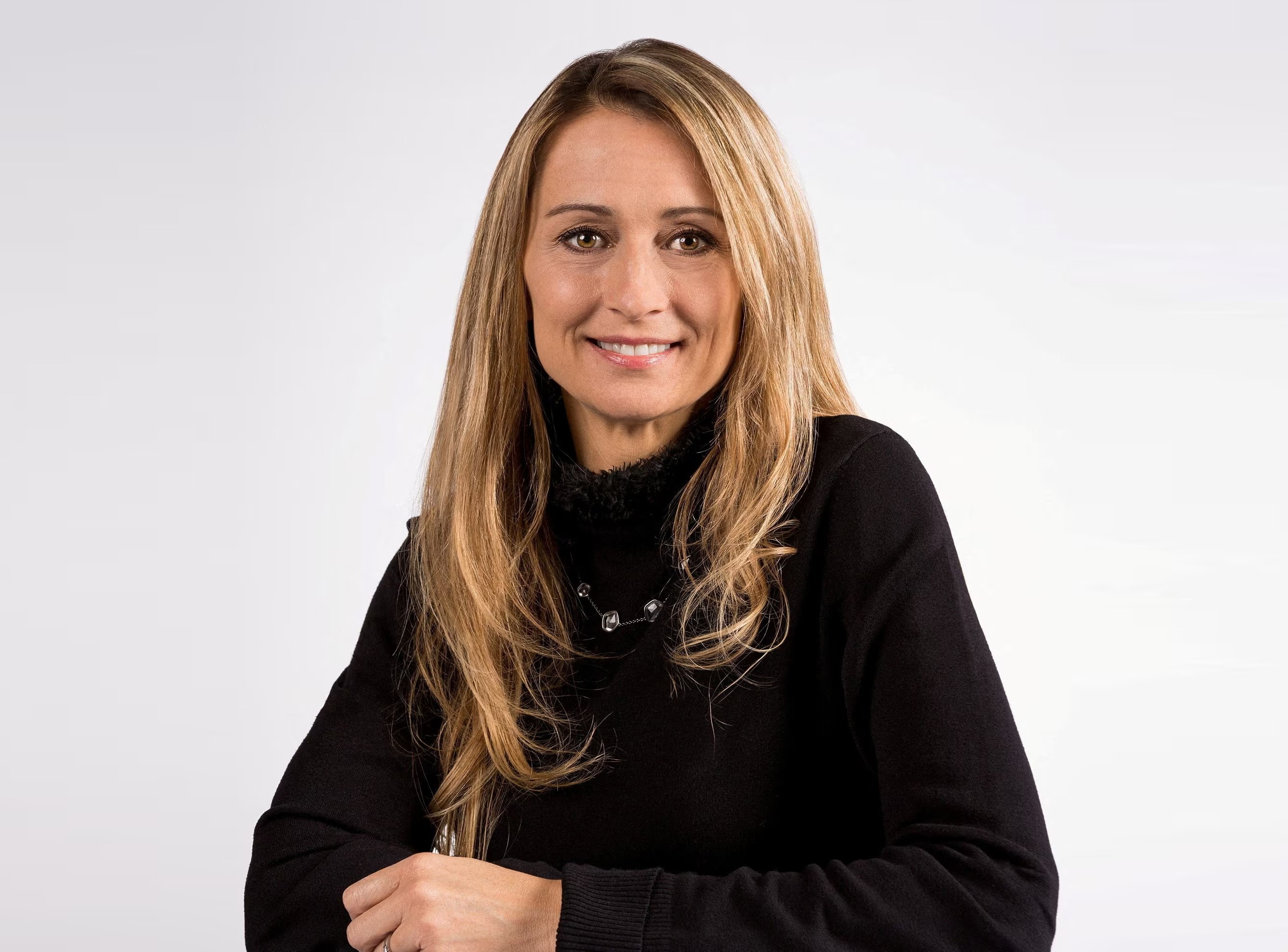
CFO Colette Kress, 59, is interim CEO while keeping the CFO role. She is a finance executive, not an engineer, with nearly 25 years at Texas Instruments, Microsoft and Cisco before joining Nvidia in 2013, and a key architect of its strategy of investing in its own customers. Harvey C. Jones, a director since 1993 and a former Synopsys CEO, becomes Nvidia's first-ever board chair.
The search for a permanent CEO has barely begun. On November 13, the board said it was still selecting a search firm and had not formally engaged any candidates. The Financial Times reported that Nvidia had approached Arm CEO Rene Haas. Former Apple CEO Tim Cook and Nvidia's Ian Buck have also been floated.
Huang ran Nvidia with around 60 direct reports and never named a successor. Neither caretaker is an engineer, and his two children, Madison and Spencer, who both work at Nvidia, did not come up through engineering either. For a company whose edge is deep engineering, that is the real succession gap.
Nvidia's footprint in the Gulf
Few regions have bet more heavily on Nvidia:
- Saudi Arabia: HUMAIN, the Public Investment Fund's AI champion, placed an initial order for 18,000 of Nvidia's GB300 Blackwell chips, part of a target of several hundred thousand GPUs. The two agreed in May 2025 to build up to 500 MW of Nvidia-powered infrastructure, with xAI as the first major customer.
- UAE: Nvidia is a partner in Stargate UAE, the 1 GW cluster being built by G42's Khazna inside a wider 5 GW campus in Abu Dhabi, alongside OpenAI, Oracle, SoftBank and Cisco.
- Chip approvals: in November 2025, the US Commerce Department cleared both G42 and HUMAIN to buy the equivalent of up to 35,000 Blackwell chips each, on condition that they meet rigorous security and reporting requirements.
- Model makers: OpenAI now deploys some of its models from Saudi data centres, and xAI plans to train there too.
All of it runs on American silicon, most of it Nvidia's. Even the alternatives, such as HUMAIN's AMD deal, come with the same US export conditions attached. That makes the Gulf one of the most Nvidia-dependent regions in the world, and closely tied to US export approvals.
The Real Risk is US Policy
Nvidia can keep shipping chips without Huang. What the Gulf has lost is something harder to replace: the most powerful voice in Washington arguing for exporting American AI.
That voice is gone just as Congress turns hawkish. Speaker Mike Johnson and Minority Leader Hakeem Jeffries both now favour strengthening chip export controls, and Senate Majority Leader John Thune says there is a "high probability" of new restrictions. Lawmakers want to attach chip-control measures to this year's defence bill, which could become law by year-end. Analysts note that Huang's departure weakens Nvidia's ability to slow those bills.
The new rules target China, but they could reach further. Reuters reports that Chinese AI firms are scrambling to secure access to Nvidia chips hosted in data centres outside China, fearing new curbs on exactly that kind of access. Any rule that tightens who may use offshore compute could affect data-centre operators worldwide, including in the Gulf.
The officials who approved the Gulf's chip deals are also under scrutiny. Commerce Secretary Howard Lutnick, who approved tens of thousands of advanced chips for the UAE and Saudi Arabia, faces allegations that he stalled action against Megaspeed. The Commerce Department denies the account, and Lutnick has been summoned to testify alongside Huang.
Gulf money is in Nvidia's web too
Under Huang, Nvidia became more than a chipmaker. It became the AI industry's financier. It holds a $30 billion stake in OpenAI, has guaranteed up to $105 billion to help OpenAI lease data-centre space, and has taken equity in Anthropic and xAI. Its latest filing lists about $530 billion in commitments. Many of the companies it backs then buy its chips, a practice critics call circular financing. CoreWeave, about 13% owned by Nvidia, closed almost 7% down on the day Huang's exit was announced.
Gulf capital sits in the same web. HUMAIN reportedly invested $3 billion in xAI. Abu Dhabi's MGX, which closed a $49 billion AI fund in July, backs both OpenAI and Anthropic. If investors start repricing the deals Huang brokered, Gulf portfolios feel it twice: once through their chip supply, and again through their stakes in Nvidia's customers.
UAE and Saudi Arabia: different starting points
The UAE starts from a stronger position. In July 2026, it became the first Arab nation moved into Country Group A:5, the most favourable US export tier, so approved Emirati entities can receive controlled American technology without a licence. G42 has also aligned its technology with US partners.
Saudi Arabia is not yet in that tier. HUMAIN still buys under case-by-case authorisations, the kind most likely to slow if Congress tightens the rules.
But both face the same reality: the region's AI build-out depends on American silicon, and the US policy environment has become more complex.
What to Watch for
- November 17: Nvidia's quarterly results, its first under Kress. Listen for any change in tone on sovereign customers and the Middle East.
- Before Thanksgiving (November 26): Huang is expected to testify before Congress, and three House committee chairs have requested a closed-door briefing on November 18.
- The Defence Bill: whether new chip-export rules are attached, and whether they reach offshore data centres.
- The CEO search: a technical, deal-making successor would reassure Gulf partners. A caretaker era would not.
- Regional statements: any public comment from HUMAIN or G42 on their Nvidia partnerships.
- Huang's stake: he and his wife have no prenuptial agreement, and California law could entitle her to roughly half of a fortune of about $140 billion. But their shares sit largely in jointly controlled trusts, so a sudden flood of founder shares looks unlikely.
The Verdict
Nvidia's chips are not going anywhere. Demand for compute remains enormous, and no rival can replace Nvidia overnight. But the Gulf's AI strategy rested on two pillars: Nvidia's silicon and US approval to buy it. Huang was one of the strongest advocates for the second. Without him, US policy, more than Nvidia's leadership, will shape the next phase of the region's AI build-out.