
Trendyol Group: How a Harvard Dropout Built a $16.5B SuperApp
10 April 2026•
%2Fuploads%2Fturkey-unicorn-2026%2Fspotlights%2Ftrendyol-founder.jpg&w=3840&q=75)
%2Fuploads%2Fstartups%2FTUR%2Ftrendyolgroup_logo.jpeg&w=3840&q=75)
In May 2025, Uber paid $700 million to acquire 85% of a single arm of Trendyol’s business — the food and grocery delivery service the company had built quietly over seven years. That one vertical, Trendyol Go, had processed 200 million orders in 2024 and generated $2 billion in gross bookings. The deal, Uber’s largest bet on a new international market in years, gave the world’s leading ride-hailing company instant market share in Turkey without building a single dark store.
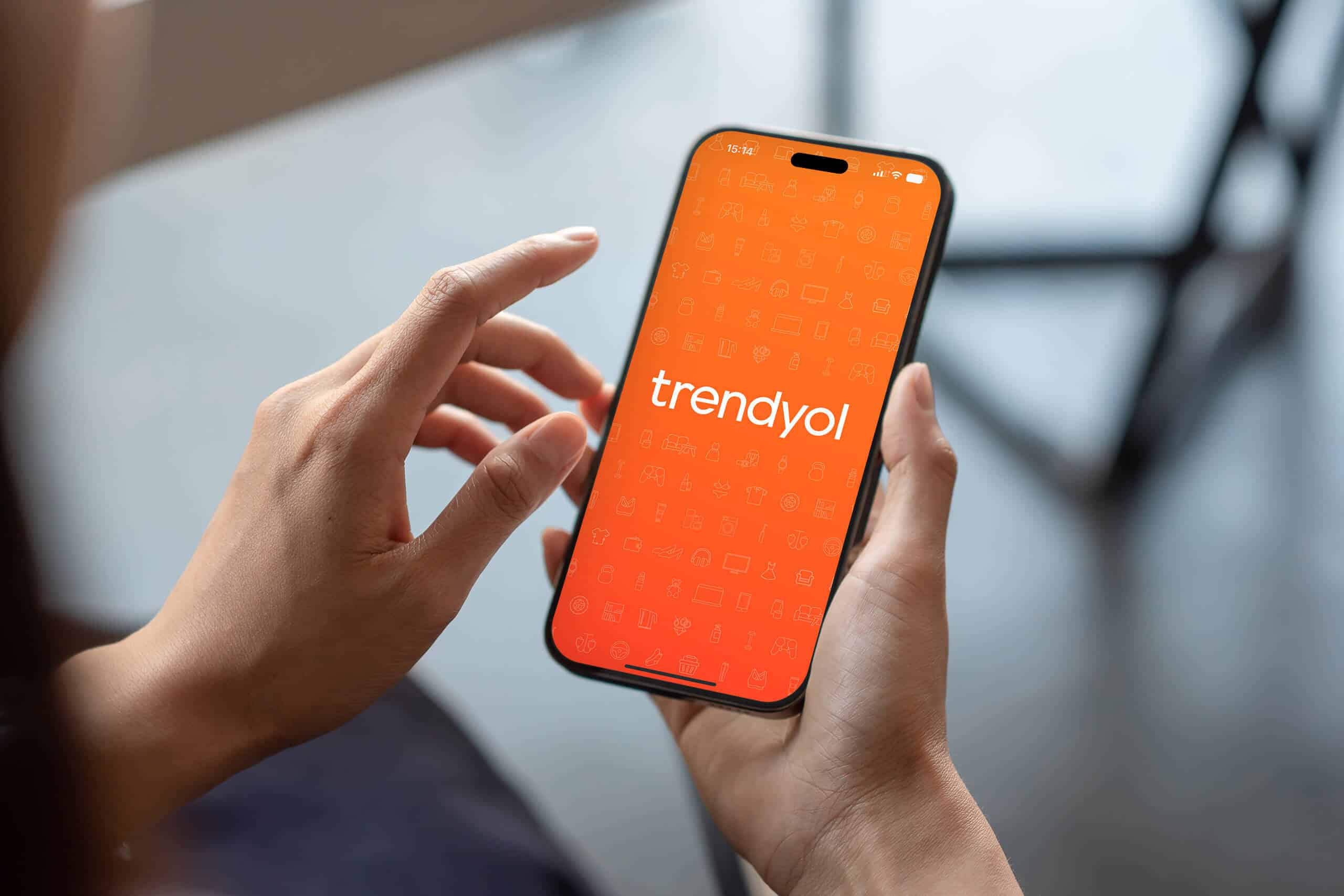
The full Trendyol Group, meanwhile, was delivering 2.5 million packages a day across 35 countries, serving 40 million customers, and processing over $12.5 billion in annual GMV in 2024. The company had been operationally profitable in Turkey since 2023. It had built Turkey’s first proprietary large language model. It was valued at $16.5 billion — the last time anyone bothered to price it, in August 2021.
That is the geometry of what Demet Mutlu and her co-founders created when she dropped out of Harvard Business School in 2009, returned to Istanbul, and started selling women’s fashion from her kitchen table with $300,000 of her own savings.
The Founder Who Saw What Turkey’s Textile Industry Couldn’t Distribute
Turkey’s textile industry in 2009 was a global export powerhouse — roughly $15 billion in annual exports, sophisticated supply chains, and a deep bench of local designer brands with genuine international appeal. The gap wasn’t in production. It was in distribution.
Fashion in Turkey was concentrated in Istanbul. Women in Ankara, Trabzon, or Gaziantep had no reliable way to access the brands and styles available to consumers on one side of the Bosphorus. The internet, in theory, should have closed that gap. In practice, Turkey’s early e-commerce market was plagued by logistics unreliability, low card penetration, and consumer suspicion rooted in real-life fraudulent experiences. Mutlu’s read was precise: this wasn’t a product problem. It was a trust problem. And the only way to solve a trust problem in retail is through the mundane accumulation of operational consistency — getting the right item, in the right condition, to the right address, on the right day, at scale, repeatedly.
Her background made her well-suited to that kind of problem. Before Harvard, she had spent years in brand management at Altria, P&G, and Reckitt Benckiser across Switzerland, Japan, the US, and Turkey — companies where building consumer confidence through operational discipline is the actual work. Trendyol’s first years would look less like a Silicon Valley startup and more like a consumer goods rollout.
Earning Trust, One Delivery at a Time
Trendyol launched in 2010. Mutlu cofounded the company alongside Evren Üçok and Begüm Tekin, bootstrapping operations with her $300,000 in personal savings while the three of them built the initial platform from scratch. Within months of launch, the company crossed $100 million in GMV — a figure that reached Tiger Global before most Turkish investors had noticed the company existed. Tiger Global made its first investment in Trendyol in July 2010, followed by subsequent rounds that brought in the European Bank for Reconstruction and Development. By mid-2011, a $26 million round co-led by Kleiner Perkins and Tiger Global made Mutlu the first Turkish female founder to attract that level of institutional venture capital.
The early focus on fashion wasn’t arbitrary. Fashion created a natural flywheel: style discovery drove traffic, which drove merchant density, which drove selection, which drove more traffic. Each improvement in delivery reliability compounded into brand equity. The category was also defensible — Turkey’s textile strength meant Trendyol could offer local brands and private labels that global platforms couldn’t replicate.
The competitive landscape at the time was fragmented. Hepsiburada, founded in 2000, was the establishment player — built on computers and electronics, operationally mature but not mobilefirst. A wave of smaller vertical marketplaces competed on price. Amazon had not yet entered Turkey. The window to build a dominant horizontal platform, if a company could earn enough consumer trust to extend across categories, was real.
Trendyol spent those years earning exactly that — then made the move that changed its trajectory entirely.
The Alibaba Bet and What It Unlocked
In June 2018, Alibaba acquired a majority stake in Trendyol for approximately $728 million — the largest internet sector investment in Turkey at the time. Alibaba’s interest was strategic, not passive: Turkey and the broader MENA corridor represented a high-growth consumer market where Alibaba’s logistics playbooks and technology infrastructure could compress years of organic development into months.
“The two companies share a very similar culture, values and both have huge ambitions for the digital economy,” Mutlu said at the announcement. The framing was deliberate. Trendyol wasn’t selling to Alibaba — it was acquiring a technology partner with operating scale it could not have built independently. What followed in the next three years justified that framing entirely. Trendyol launched Trendyol Express in 2018, building an own-logistics network that would eventually handle 2.5 million daily deliveries — the operational backbone that no competitor could match. It acquired Dolap, a secondhand fashion platform that now hosts 1.4 million individual sellers. It built Trendyol Go as a standalone food and grocery delivery business with its own courier fleet. It embedded Trendyol Pay as the payment layer across all verticals. And it entered 27 European countries in October 2020 — a year before the decacorn round that would validate every bet placed since the kitchen table.
If Hepsiburada’s story is about patience — twenty years of building consumer trust before institutional capital arrived — Trendyol’s story is about what happens when operational discipline meets the right strategic partner at the right moment. The Alibaba deal didn’t hand Trendyol its market position. It gave Trendyol the technical and financial firepower to build something no competitor could replicate: a closed-loop superapp ecosystem where switching costs compound across every additional service a consumer uses.
Decacorn: A New Reference Point
In April 2021, Alibaba invested a further $350 million in Trendyol at a $9.4 billion valuation — bringing its stake to 86.5 percent and signalling that the company’s growth trajectory had become a conviction bet rather than a portfolio hedge. Four months later, the $1.5 billion round that made Trendyol Turkey’s first decacorn reframed what the country’s technology sector was capable of producing.
Co-led by General Atlantic, SoftBank Vision Fund 2, Princeville Capital, and sovereign wealth funds from Abu Dhabi (ADQ) and Qatar (QIA), the August 2021 round valued Trendyol at $16.5 billion — placing it among the highest-valued private technology companies in all of Europe. By that point, Trendyol held 34% of Turkey’s e-commerce market. Hepsiburada — its most credible competitor — held 11%.
“Turkey is one of the fastest growing economies in the world and benefits from attractive demographics, with a young population that is very active online,” General Atlantic’s Melis Kahya Akar said at the time. The institutional framing was precise: Turkey was no longer a frontier market allocation. It was a conviction bet, made with sovereign capital from the Gulf alongside some of the most disciplined growth investors in global tech.
The data behind the milestone was concrete: 30 million shoppers, one million packages delivered daily, and GMV growth of approximately 20 times over the prior three years.
What the SuperApp Actually Is
By 2023, Trendyol crossed a threshold that most fast-growth e-commerce companies defer indefinitely: it achieved its first operational profitability in Turkey.
The milestone was less about margins than about architecture. Trendyol had spent years building the superapp thesis — that a platform combining marketplace, logistics, delivery, payments, and resale could create switching costs that no single-vertical competitor could overcome. Profitability proved the architecture worked at scale, not just in the investment deck.
The scale markers by that point were formidable. Over one billion orders processed in 2023 alone. Revenue from trendyol.com reaching $12.5 billion GMV in 2024. Central and Eastern European expansion across Romania, Czech Republic, Greece, and Hungary — with a warehouse near Bucharest under construction. And Turkey’s first proprietary large language model, built in collaboration with Alibaba’s chip and machine-learning infrastructure, designed to enable cross-border seller communication across 25 countries. The competitive moat had become structural. A customer buying fashion on Trendyol, ordering groceries through Trendyol Go, selling a used coat on Dolap, and paying with Trendyol Pay is not using a marketplace. She is embedded in an ecosystem — and the cost of switching is not just switching an app. It is switching five habits simultaneously.
The Gulf: A New Chapter
While Trendyol’s European and Central Asian expansions have proceeded steadily, it is the Gulf where the company is making its most strategically significant international bet. Trendyol’s mobile app debuted in the Gulf in August 2023 and reached 30,000 orders per day by November of that year. By the end of 2024, the company had surpassed $1 billion in Gulf GMV — ahead of its own target — with close to three million active shoppers and more than eight million app downloads across the UAE, Saudi Arabia, Bahrain, Kuwait, Oman, and Qatar.
Saudi Arabia quickly emerged as Trendyol’s second-largest market globally, accounting for roughly 75% of all regional orders, and the company has invested accordingly — opening dedicated offices in Riyadh and Dubai, hiring more than 500 warehouse staff across the region, and building fulfillment infrastructure designed to reduce delivery times to competitive standards. The platform now works with over 15,000 creators across Instagram, Snapchat, and TikTok for Gulf-specific content, has launched AI-designed fashion collections exclusively for the regional market, and is actively expanding its local seller base to complement the Turkish-origin inventory that gave the platform its initial differentiation.
The MENA e-commerce market — valued at approximately $29 billion in 2024 and projected to reach $50 billion by 2028 — represents a structural growth opportunity that sits at the intersection of everything Trendyol has already built: a mobile-first consumer base, high smartphone and internet penetration, underserved demand for fashion and convenience, and a geographically proximate manufacturing base in Turkey that no other regional platform can match. “You cannot operate from a distance,” Trendyol Group President Çağlayan Çetin has said. The Gulf infrastructure Trendyol is building suggests it intends to prove that point thoroughly.
The Uber Signal and the IPO Question
The $700 million Trendyol Go transaction, announced in May 2025, was the clearest external validation of what the superapp thesis had produced. Uber, one of the world’s most sophisticated delivery operators, acquired 85% of a business that Trendyol had built as a supporting vertical — and in doing so, gave the broader Trendyol Group both a significant capital event and a globally credible strategic partner anchoring its delivery infrastructure.
Trendyol Group President Çağlayan Çetin framed the deal against the IPO horizon that now defines the company’s medium-term agenda: “Our strategy is to continue investing in key markets and driving innovation through AI and logistics. Once we reach 50 per cent of sales internationally, we will look towards going public.”
At roughly 20% international revenue today, the gap is real. Whether the Gulf, Europe, and new market entries close it by 2030 — the company’s stated IPO window — is the operating challenge of the next chapter. A dual listing on Istanbul plus London or New York would position Trendyol simultaneously as a Turkish national institution and a globally investable technology platform. Getting there requires proving that what worked in Turkey, with its 85 million consumers and deep Trendyol brand recognition, can be rebuilt from scratch in markets where the brand is still earning its trust.
That is a different kind of problem from the one Mutlu solved in 2010. The trust problem then was Turkish consumers and the reliability of an online order.
The trust problem now is international capital markets and the credibility of a Turkish-born superapp with a Chinese majority shareholder, competing in German, Gulf, and Central European markets simultaneously.
What she and her co-founders built from a kitchen table has already answered one version of that question. The next answer is harder to engineer — and far more consequential.
This is just the surface. Our The State of Unicorns: Turkey 2026 report unpacks the data, players, and forecasts - read now!

%2Fuploads%2Fturkey-unicorn-2026%2Ftur26-new-cover2.jpg&w=3840&q=75)