
Building an Electrified Nation With EVIQ
16 October 2025•
%2Fuploads%2Fev-2025%2Fspotlights%2Felectrified-nation%2Fen-eviq-cover.jpg&w=3840&q=75)
%2Fuploads%2Fev-2025%2Fspotlights%2Felectrified-nation%2Feviq-logo.jpg&w=3840&q=75)
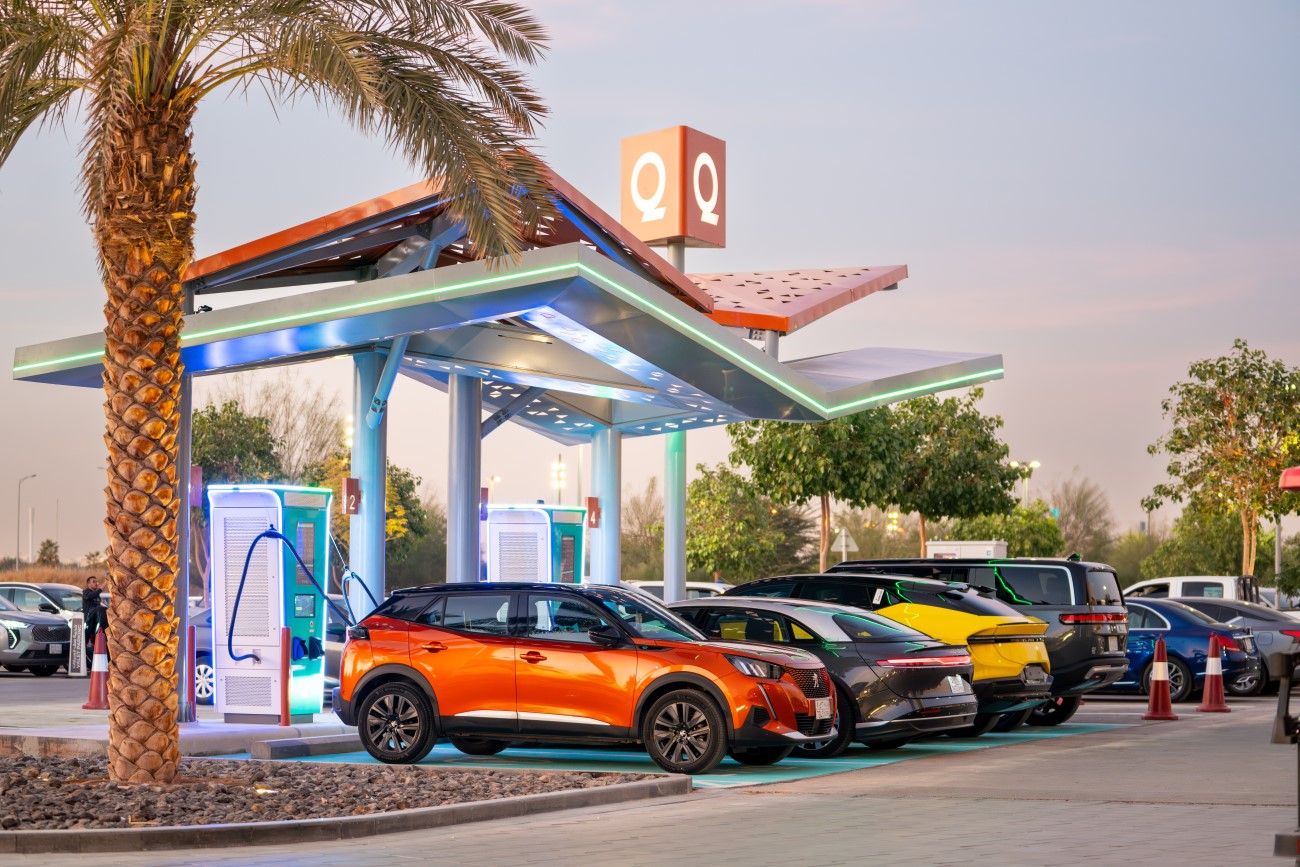
Picture this: you’re cruising along Riyadh’s gleaming highways, past malls, offices, and sprawling suburbs—and there, out of the corner of your eye, you’ll likely spot an EV silently pulling into an EVIQ charging hub, glistening a bold teal color, in the midday sun. These fast chargers aren’t just dotting the Kingdom—they’re lighting the path toward Saudi Arabia’s notable pivot from oil-dependence to electrified mobility. And at the center of this transformation is EVIQ—the Public Investment Fund (PIF) and Saudi Electricity Company (SEC)–backed joint-venture startup with a mission to power a national charging ecosystem aligned with Vision 2030.
An Electrifying Landscape
EVIQ has been tasked with no small mission: to deploy more than 5,000 fast charging EV chargers, enabling the growth of the EV ecosystem in Saudi Arabia. The Kingdom’s EV journey is just getting off the starting blocks. As of early 2025, just over 23,000 EVs were registered across the Kingdom—roughly 1% of all passenger vehicles. However, that number is expected to explode, as the Kingdom has set its sights on becoming a leader, EV manufacturer and promoter of electric mobility by 2030.
Equally ambitious targets have been set for the capital city of Riyadh driven by the city’s commitment to the reduction of carbon emissions and ensuring desirable air quality for its residents. The Riyadh Municipality has publicly declared its desire to see 30% of all new car sales in Riyadh be electric by 2030, in order to reduce carbon emissions in the city by 50%. [Note: it has previously been falsely reported that Riyadh will convert 30% of its’ vehicles on the road to electric by 2030, but when we looked to verify this data, it was found to be misreported.]
By scaling electric vehicle adoption across the Kingdom, Saudi Arabia aims to eliminate 278 million tonnes of CO₂ equivalent per year by 2030. This amount represents approximately half of the projected emissions from power generation in that period, demonstrating the critical role EVs play in meeting SGI’s national climate goals.
What else is fueling the growth of EVs in the Kingdom? A mix of lower battery costs (lithium prices dropped ±83% between 2013 to 2024), supportive government policy and coordinated government interventions to support Vision 2030 above all else—which sets out a national mission to diversify the economy away from oil to new non-oil economic sectors. EV-related industries—manufacturing, software, battery tech—align perfectly with the kingdom’s push toward a 20% industrial GDP contribution by 2025.
One of twelve critical sectors to achieve this is a healthy local EV manufacturing and electric mobility sector—which the Kingdom has poured billions of dollars of investment into creating from scratch. Saudi’s PIF has set an EV production goal of 500,000 units/year by 2030, of which several Saudi-based manufacturers are already on schedule to contribute 455,000 by 2030.
Made‑in‑Saudi: Homegrown EV
Manufacturing Saudi Arabia is not just charging cars—it’s building them from the ground up. Under the “Made in Saudi” banner, the Kingdom has begun constructing its own EV manufacturing future.
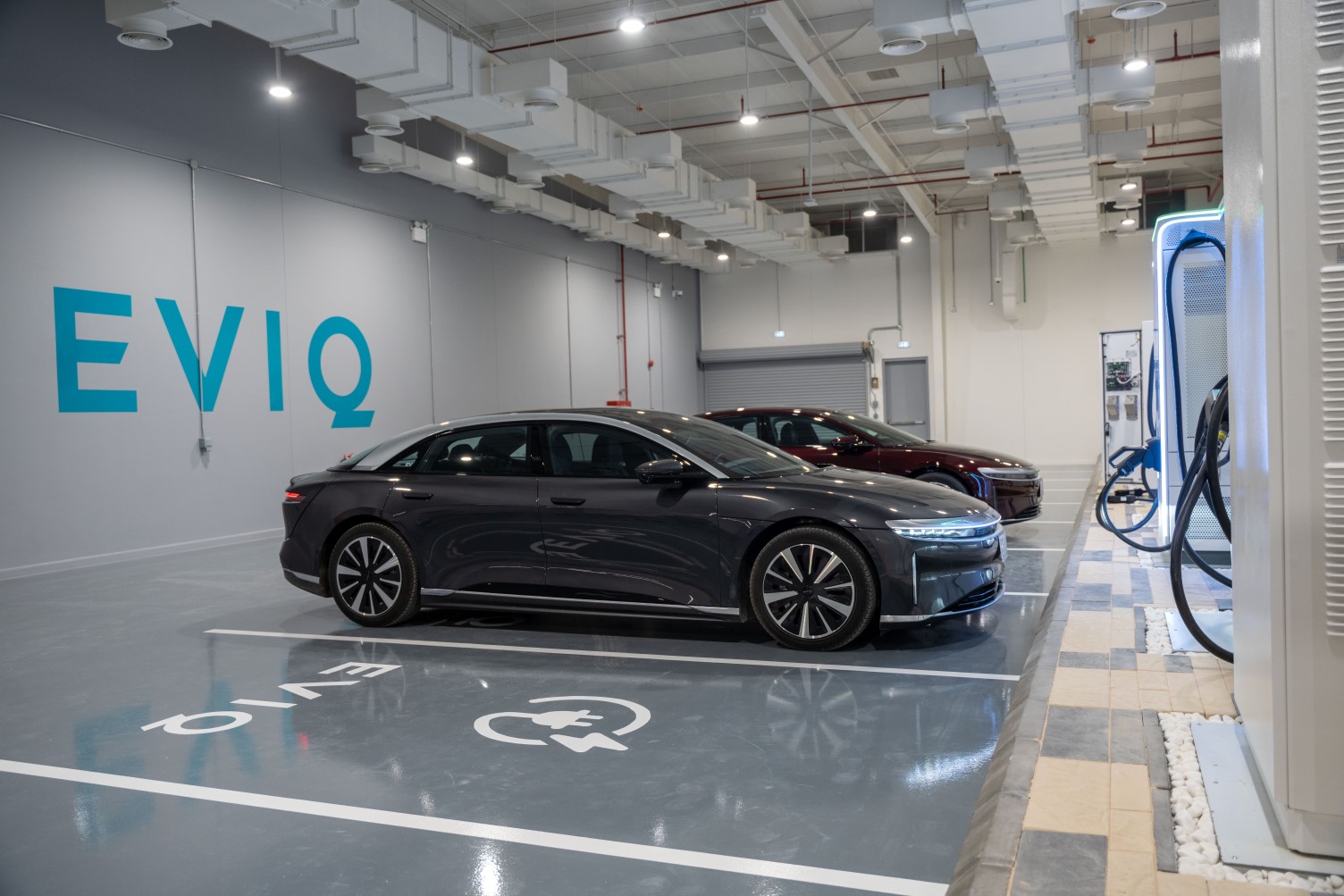
Lucid Motors made headlines by installing a badge of national pride on its Electric Air: the first EV to show the “Saudi Made” mark. Operating out of its AMP‑2 assembly plant in King Abdullah Economic City (KAEC) since September 2023, Lucid currently assembles 5,000 vehicles/year, with a pending growth to 155,000/year. Beyond prestige, this plant is weaving deep into Vision 2030’s industrial ambition—enhancing GDP, local skills, and in-country tech supply chains.
Meanwhile, PIF and Foxconn’s new joint venture Ceer Motors rolled out its first Saudi brand in November 2022. Foxconn is the world’s largest contract electronics manufacturer, and the 4th largest information technology company by revenue. The Taiwanese company is constructing a vehicle plant in King Abdullah City with production expected to start in 2025.
With Korea’s Hyundai, China’s BYD, and America’s Tesla making their individual entry into the Saudi EV market, there is no shortage of global automakers’ interest. It’s evident also that the Kingdom is not just building electric vehicles, but a whole driving ecosystem—from steel to software, batteries to showrooms. The Kingdom is also putting money where its mouth is: the Kingdom has allocated US $9 billion towards the mining, development and manufacturing of EV-related materials. In line with this, the Ministry of Investment has signed a $5.6 billion agreement with Shanghai’s Human Horizon, to explore EV manufacturing, R&D, and bringing autonomous vehicle tech to the Kingdom. Saudi Arabia has also signed $900 million with EV Metals Group—an Australian company specialized in securing and developing battery minerals—and $126 million with Ivanhoe Electric—a US-based mineral exploration and technology company; both evidence that Saudi Arabia is looking to strategically tap into the Kingdom’s substantial mineral reserves to aid in its local EV production and battery manufacturing ambitions.
EVIQ: Building Catalyzing Infrastructure
But charging infrastructure is the silent—yet essential—backbone of this entire transformation. For decades, Saudi drivers grew up trusting the roar of combustion engines and the certainty of gasoline—cheap, abundant, and omnipresent. Electricity, by contrast, was once viewed as unreliable, particularly outside major cities, and rarely associated with mobility. This is especially true in a country that has no railways, subways, or mass electrified transport system, to date.
Asking Saudis to now plug in instead of fill up represents not just a technological shift, but a cultural one. The Kingdom faces a very real “psychological obstacle” in convincing consumers that EVs can match the reliability they’ve long associated with petrol, particularly amongst the oldest generation.
This makes EVIQ’s role absolutely pivotal. The company isn’t just laying down charging stations—it’s solving the classic chicken-or-egg dilemma. Are Saudis hesitant to adopt EVs because infrastructure isn’t ready? Or is infrastructure lagging because demand hasn’t materialized? EVIQ, backed by the Public Investment Fund and Saudi Electricity Company, was built to remove that question decisively, and simply work towards enabling the electric mobility movement to take hold faster, without friction.
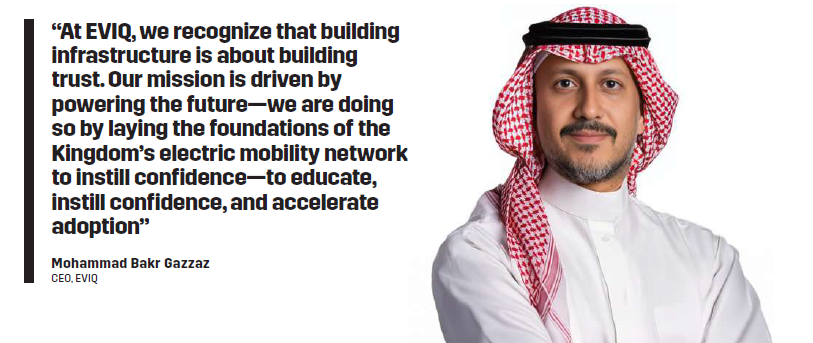
“At EVIQ, we recognize that building infrastructure is about building trust. Our mission is driven by powering the future—we are doing so by laying the foundations of the Kingdom’s electric mobility network to instill confidence—to educate, instill confidence, and accelerate adoption,” says Mohammad Bakr Gazzaz, CEO of EVIQ.
“In line with the Kingdom’s Vision 2030, we are spearheading the enablement of the EV ecosystem in Saudi Arabia. Electric vehicles are the future. To date, we are present in 4 cities in over 35 locations, with 88 chargers and 171 (connecting) cables deployed.”
Gazzaz goes on to say, “by ensuring that EV charging is reliable, accessible, and available, we are making it easier for every driver to make the shift with certainty. This is more than just a technological transition—it is a mindset shift. We are establishing a robust foundation for the sector, making electric mobility more attractive and accessible to consumers.”
EVIQ must lead the charge—literally—by easing range anxiety, standardizing fast-charging access, and proving that Saudi roads are ready for a fully electric future. Without it, EV growth may stall not because of product readiness, but because of public perception.
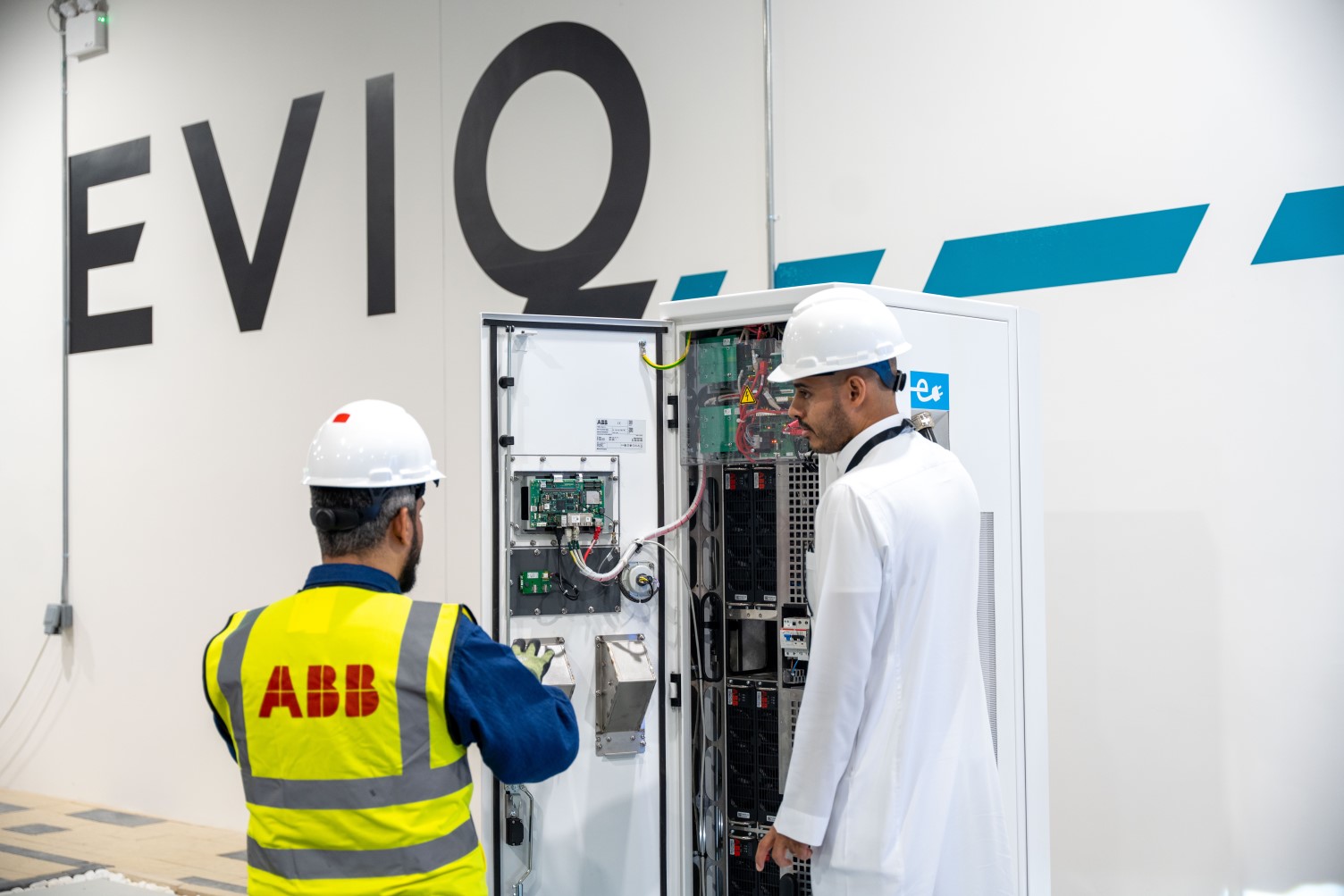
EVIQ’s digital “plug, charge & go” platform isn’t just functional—it’s thoughtful, offering real-time availability and route planning. That’s crucial for individuals and families alike looking to the EV future with confidence. These installations are far more than EV infrastructure—they’re enablers for Lucid’s AMP-2, Ceer’s future assembly, and Tesla’s Superchargers, supporting a full EV ecosystem on Saudi soil. This is why strategic partnerships have been a fundamental underpinning of EVIQ’s growth objectives.
Powerful Strategic Partnerships
EVIQ isn’t working in isolation; it thrives on purposeful partnerships. In May 2024, Lucid Motors and EVIQ signed a strategic Memorandum of Understanding to collaborate on expanding Saudi Arabia’s high-speed EV charging infrastructure. Under the agreement, Lucid will integrate its charging-capable vehicle fleet—such as the Lucid Air—with EVIQ’s fast-charging network to enhance consumer convenience and reliability across the Kingdom.
Ceer signed a similar agreement which harmonized Ceer’s rollout with EVIQ’s network—ensuring customers nationwide would have ready access to charging. In 2025, BYD via Al‑Futtaim, as well as Chinese auto makers Zeekr and Lotus also signed collaborations that would embed EVIQ’s network within diverse EV brands across the Kingdom, ensuring charging compatibility and scalability.
This ecosystem-of-ecosystems approach ensures each new EV model hitting the road is supported by strategic infrastructure and market access.
Overcoming Headwinds
Yet, the road isn’t without challenges. Lucidity Insights’ research shows that Saudi Arabia has approximately 130 public fast chargers in mid 2025. Far from the 5000 public fast chargers the Kingdom is setting out to install by 2030, and far from what a 1 million EV base will require.
EVIQ must also consider harsh desert heat impacts on battery performance—forcing OEMs and EVIQ to deploy high-performance cooling systems and plan plug-in stations near shaded facilities.
Consumer range anxiety remains real, especially for highway travel—but every new EVIQ hub on main corridors, such as the Riyadh–Qassim–Mecca roadway, chips away at that barrier. EVIQ’s methodical rollout—city hubs, integrated highways, and app-based route planning—all directly addresses these challenges.
Imagining an Electrified Nation
Imagine this near-future snapshot: On your morning commute in Riyadh, your Ceer or Lucid Air pulls into a crowded EVIQ charging station alongside the highway; ambient cooling keeps the station comfortable. As you sit in the waiting area, you nod politely and have a conversation with a friendly commuter you’ve seen here many times before. As you grab your morning coffee, you plan a weekend trip to Jeddah. You open EVIQ’s app to see where you can cross-charge at SASCO and trace your route that adjusts for battery temperature and load. Right there, on this single EVIQ app on your phone, you can monitor your charging, manage your payment, and plan any upcoming trips and optimal charging routes: all seamless, embedded in an ecosystem connecting manufacturers, grid operators, and startups.
That near-future scene reflects a bold promise: Saudi Arabia’s desert highways ignited by EVs, powered by investment, driven by policy, and connected by EVIQ. EVIQ is not just building chargers; it’s empowering a transformation. It’s the accelerator plug in Saudi’s economic engine—electrification, innovation, and industrial leadership. From 23,000 EVs today to millions tomorrow, from 1% market share to 30% by 2030, and from import reliance to “Made in Saudi” pride—EVIQ is ensuring the journey is charged, connected, and unstoppable.
.jpg&w=3840&q=75)
%2Fuploads%2Fev-2025%2Fcover27.jpg&w=3840&q=75)