
NVIDIA Just Hit $5.7 Trillion. Here's Why That Number Is Only Half the Story.
15 May 2026•
%2Fuploads%2Farticles%2F2026%2F0515_nvidia%2Fnvidia-57t-cover.jpg&w=3840&q=75)
Yesterday, NVIDIA did something no company in history has done before: it closed with a market capitalization of $5.7 trillion, following a 4% single-day surge that set a new intraday record. To put that in perspective, that's larger than the entire GDP of Japan. It's more than what Apple and Microsoft combined were worth just a few years ago. It is, by any measure, an extraordinary number.
But the market cap figure, eye-watering as it is, understates what's actually happening here. NVIDIA isn't just a chip company that got very lucky at the right moment. It is, increasingly, the toll booth on the highway to the AI economy — and finding an alternate route is still far-fetched.
From Hardware Afterthought to Economic Infrastructure
For most of the 2010s, conventional wisdom held that software would eat the world. Code scaled infinitely. Hardware was a commodity. The idea that a semiconductor company would one day be the most valuable entity on the planet would have seemed like a punchline.
Jensen Huang never believed it. NVIDIA's CEO has long insisted that accelerated computing — the kind his GPUs enable — would eventually underpin every serious workload in the global economy. He describes NVIDIA not as a chip maker but as an "AI factory": a platform that converts raw electricity and data into intelligence at industrial scale.
That framing has proven more prescient than almost anyone expected. Since ChatGPT launched in November 2022 and ignited the generative AI era, NVIDIA's stock has surged more than 12-fold. In fiscal year 2025 (ending January 2025), the company posted record annual revenue of $115.2 billion — a 142% year-over-year increase. Its data center segment, now the primary growth engine, hit $51.2 billion in a single quarter (Q3, ending October 2025). NVIDIA projected approximately $65 billion in Q4 alone.
These are not chip company numbers. They are the numbers of a company that has become critical infrastructure.
The Moat Nobody Talks About Enough

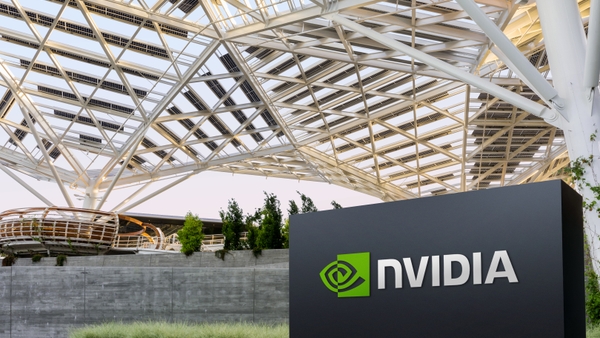
NVIDIA controls roughly 80% of the AI accelerator market by revenue, according to IDC. But market share figures alone don't capture why that dominance is so durable.
The real story is CUDA — NVIDIA's proprietary software ecosystem that sits between developers and its hardware. Over nearly two decades, the world's AI researchers, engineers, and developers have built their workflows, tools, and institutional knowledge on top of CUDA. Switching costs are extraordinarily high. Rivals have repeatedly tried to compete on hardware specifications alone, and repeatedly discovered that raw performance means little if the developer ecosystem doesn't follow.
That software lock-in has given NVIDIA something rare in the technology industry: pricing power that compounds. Its latest Blackwell architecture isn't incremental — it's a purpose-built AI supercomputing system that Huang describes not as a chip, but as a platform. The company already has over $500 billion in orders for Blackwell and its next-generation Rubin processors.
What Drove Yesterday's Surge?
The 4% single-session jump that pushed NVIDIA past $5.7 trillion reflects several converging catalysts:
Enterprise AI spending is accelerating, not plateauing. Every major cloud provider — AWS, Azure, Google Cloud — is racing to build out AI inference infrastructure, and NVIDIA GPUs remain the default choice. The data center buildout that analysts expected to cool has instead intensified as agentic AI workloads require dramatically more compute than simple chatbot applications.
The OpenAI deal. NVIDIA announced plans to invest up to $30 billion in OpenAI as part of a broader funding round — what would be its largest single investment ever. The move signals that NVIDIA isn't content to be a supplier to the AI ecosystem. It wants equity in the outcome.
Sovereign AI tailwinds. NVIDIA is actively partnering with European governments and telecoms to deploy sovereign AI infrastructure. As nations race to avoid dependence on foreign AI systems, they are building national compute capacity — and NVIDIA is the default provider.
The Headwinds Are Real Too
None of this means NVIDIA's position is unassailable. The risks are significant, and serious investors are watching them closely.
The custom silicon threat. Google, Amazon, Meta, and Microsoft are all developing their own AI chips, designed to reduce dependency — and spend — on NVIDIA hardware. JPMorgan estimates that custom chips could capture as much as 45% of the AI chip market by 2028. NVIDIA's hyperscaler customers are, in a real sense, its most motivated competitors.
Export controls are biting. In April 2025, the U.S. government effectively banned NVIDIA's H20 chip from China — a move that cost the company an estimated $15 billion in lost revenue. With geopolitical tensions between the U.S. and China showing no sign of easing, NVIDIA's ability to serve the world's second-largest AI market remains structurally constrained.
Regulatory scrutiny is mounting. Both the DOJ and the EU have opened antitrust probes into NVIDIA's market position. The company's dominance — the very thing that has made it so valuable — is now drawing the kind of regulatory attention that has historically created friction for technology giants at scale.
The inference shift. Perhaps the most structurally interesting challenge is this: the AI industry is moving from model training (where NVIDIA dominates) to inference and deployment (where the economics favor leaner, cheaper, purpose-built chips). Whether NVIDIA's architecture evolves fast enough to own that next phase is the defining question of its next chapter.
Why This Milestone Matters Beyond the Number
There's a temptation to treat a $5.7 trillion market cap as a Wall Street story — a tale of momentum, multiple expansion, and momentum-chasing capital. That would be a mistake.
What NVIDIA's valuation actually reflects is a global consensus that compute is the scarce resource of the AI era. Read that again. It’s not models. Not data. Not talent. Compute. The physical infrastructure to run intelligence at scale is the bottleneck, and NVIDIA controls the bottleneck.
That positioning has geopolitical consequences, not just financial ones. Countries are measuring their AI readiness partly in terms of GPU availability. Data center capacity has become a national security consideration. The chip has become what oil once was — a foundational input whose control confers strategic advantage.
Jensen Huang saw this coming before most. The market, at $5.7 trillion, is finally fully agreeing with him. The question now is whether anything — regulation, competition, or the shifting demands of a maturing AI industry — can loosen the grip.
© 2026 Lucidity Insights | lucidityinsights.com
.jpg&w=3840&q=75)