
The Kingdom's Strategic Transition to Sustainable Mobility
14 October 2025•
%2Fuploads%2Fev-2025%2Farticles%2Fsustainable-mobility%2Fsustainablecover.jpg&w=3840&q=75)
Creating Jobs and Reducing Carbon
Saudi Arabia’s electrification drive is not simply about cleaner cars—it’s a strategic economic pivot at the heart of the Kingdom’s Vision 2030 mission to diversify Saudi’s economy, create new non-oil revenue streams, and forge global industry leadership. In recent years, Saudi Arabia has launched entertainment, tourism, sports, and cultural sectors—all from scratch—to reduce oil dependence. Building a domestic electric vehicle (EV) ecosystem offers the nation similar potential: creating new industries, boosting exports, generating thousands of new jobs (30,000 by 2030 by some estimates), and propelling non-oil GDP growth - all while accelerating the Kingdom towards its sustainability ambitions.
On the sustainability front, Saudi Arabia has aimed high—the Kingdom is targeting a 50% share of electricity generation from renewables by 2030—mostly backed by wind and solar projects; this is remarkable, particularly for one of the world’s most oil rich nations that boasts some of the lowest fuel prices in the world. Saudi Arabia has also made a commitment to reach net-zero carbon emissions by 2060, and is backing carbon capture projects as well as investing in the sustainable mobility shift, in hopes that most Saudi citizens and residents will be driving around in Electric Vehicles one day. As part of that effort, the capital city of Riyadh has even expressed a desire for 30% of all new cars sold in Riyadh to be electric by 2030. All this—and many more energy efficiency projects—falls under the Saudi Green Initiative, which aims to eliminate 278 million tons of CO₂ emissions by 2030, while significantly improving urban air quality across the country.
Building a Local EV Powerhouse
The Kingdom isn’t just importing cars—it’s building them in the desert. The government-backed Public Investment Fund (PIF) is channeling approximately $50 billion into EV manufacturing and infrastructure initiatives. This includes $5.9 billion into Saudi Arabia’s first home-grown EV brand, Ceer Motors (a PIF–Foxconn joint venture); $10 billion into the Lucid Motors plant in King Abdullah Economic City—making Lucid the first to produce an EV ‘made in Saudi’; over $20 billion to be invested into the localization of EV supply chain, components and parts—including battery manufacturing; over $6 billion earmarked to roll-out EV charging infrastructure across the nation; and a number of smaller, but substantial partnership deals such as the $500 million strategic deal signed with Hyundai to build a factory near Jeddah. PIF also signed a $5.6 billion deal with Human Horizons, the Chinese EV firm behind the ultra-premium, high-tech and autonomously driving HiPhi vehicles, to help Saudi Arabia establish an R&D and manufacturing facility in the Kingdom. Collectively, the EV facilities already announced are targeting a total production of 450,000–500,000 EVs annually by 2030, a scale essential to reshaping Saudi’s economy.
BYD, China’s largest EV automaker, is the world’s largest New Energy Vehicle (NEV) manufacturer today, having sold 4.27 NEVs in 2024 (NEVs include BEVs and PHEVs). BYD has declared that it is opening 10+ showrooms in Saudi Arabia by 2026, with an initial annual sales targeted at 5,000 EVs with charging infrastructure integration.
Tesla, the world’s largest and most prolific BEV manufacturer, also finally entered the Saudi market in April 2025, opening its first Riyadh showroom amidst growing infrastructure plans to support electrification.
This isn’t just theory—it’s action. In under five years, Saudi Arabia has put together a global automotive line-up, domestic manufacturing, and industrial supply chains.
The ‘Made in China’ Playbook
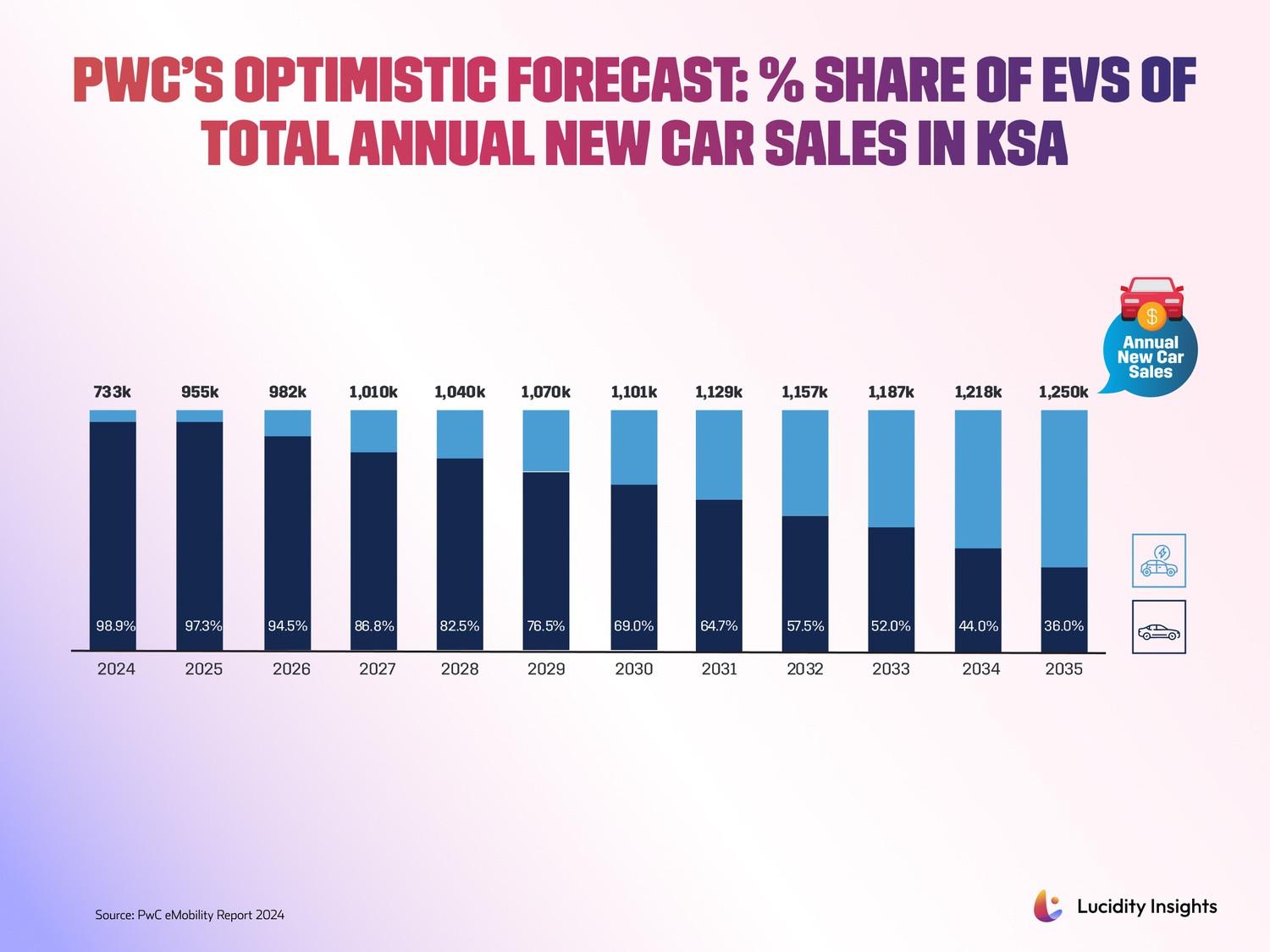
Saudi Arabia’s nascent electric vehicle (EV) industry is drawing heavily from China’s proven EV playbook—intensive State investment, rapid industrial scaling, and vertically integrated supply chains. Since 2009, China has poured over $230 billion into its EV sector through subsidies, R&D funding, infrastructure development, and purchase incentives. The result: China now dominates global EV production—accounting for 60% of global EV sales in 2023, with nearly 37 million NEVs (“New Energy Vehicles” refers to both fully (BEV) or partially (PHEV) electrified vehicles) on it’s roads by mid-2025; as of the end of 2024, over 20 million of these vehicles were electrified passenger cars (vs. commercial vehicles).
Saudi Arabia has mirrored this strategy, coordinating PIF-backed investments totaling over $50 billion into factory build-outs (Ceer, Lucid, Hyundai), charging infrastructure, and ecosystem support. While China’s challenge lies in managing overcapacity and strained supplier networks, Saudi Arabia faces desert-specific hurdles—extreme heat, limited initial charging infrastructure, and a perception that fuel is more reliable than electricity—particularly amongst its older generation.
High Heat Performance
Saudi Arabia’s success isn’t assured. The desert heat with temperatures that often exceed 50°C in the summer, can degrade battery performance and limit driving ranges. Saudi is actively investing in cutting-edge R&D to enhance EV battery resilience under extreme heat—an essential step if electrification is to succeed in the Kingdom’s climate.
Researchers at KAUST, in partnership with Aramco, are developing “hot batteries” capable of operating reliably in high temperatures up to 130°C, by innovating new electrolytes and separators that mitigate thermal degradation. Complementing this, the domestic market for advanced EV battery cooling systems reached $31 million in 2024, with projections to exceed $114 million by 2033, driven by the need for efficient liquid cooling solutions tailored to desert conditions. Meanwhile, Aramco and Chinese EV manufacturer BYD are collaborating to adapt temperature-tolerant battery chemistries—such as LFP Blade batteries—for Middle East EVs and charging infrastructure, ensuring sustained performance in 40°C+ environments. These strategic efforts—spanning from fundamental R&D to supply-chain development—underscore Saudi Arabia’s commitment to ensuring that its EV fleet isn’t just manufactured domestically, but is also optimized for its unique local environment.
Range Anxiety & Optionality
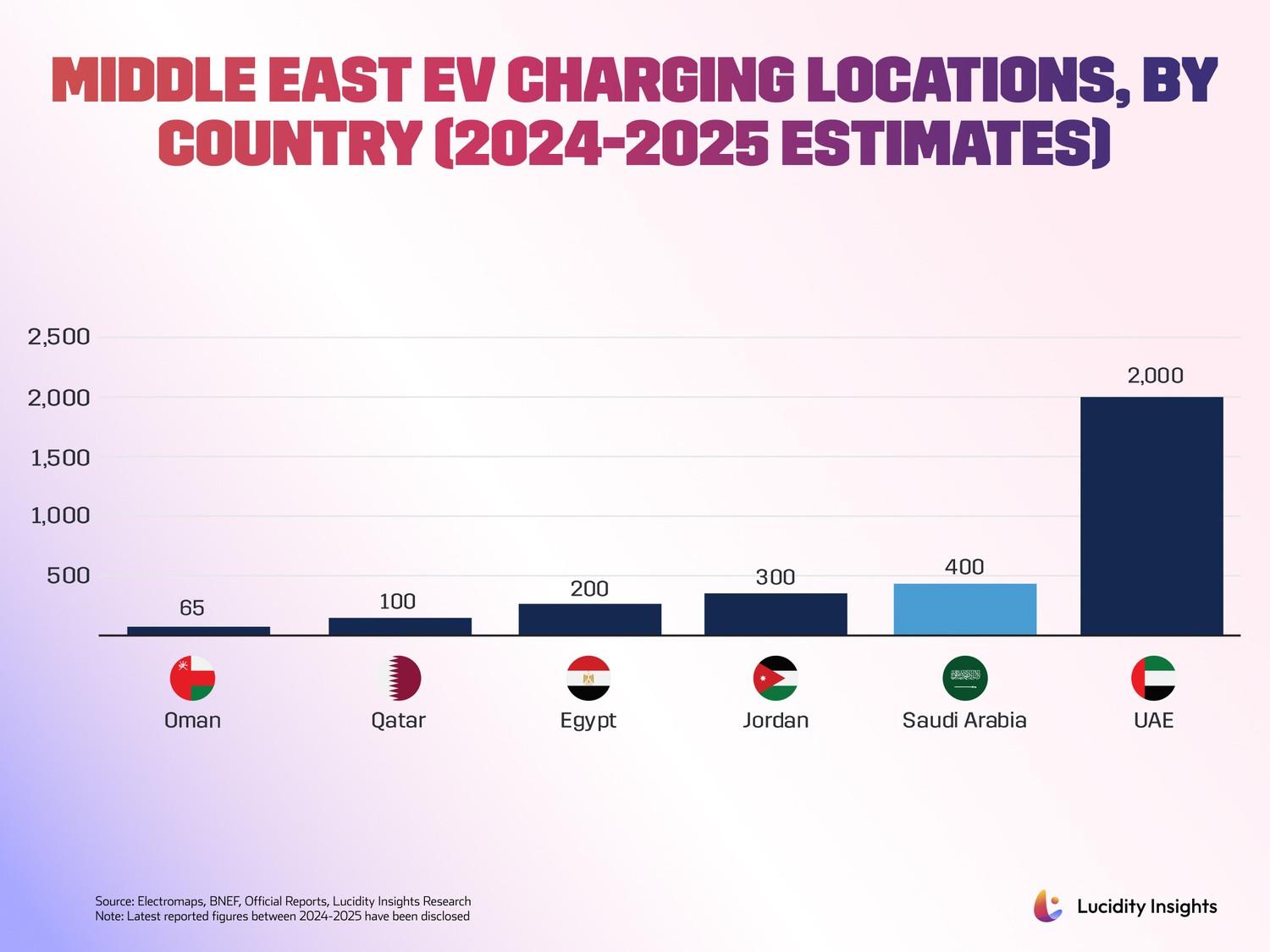
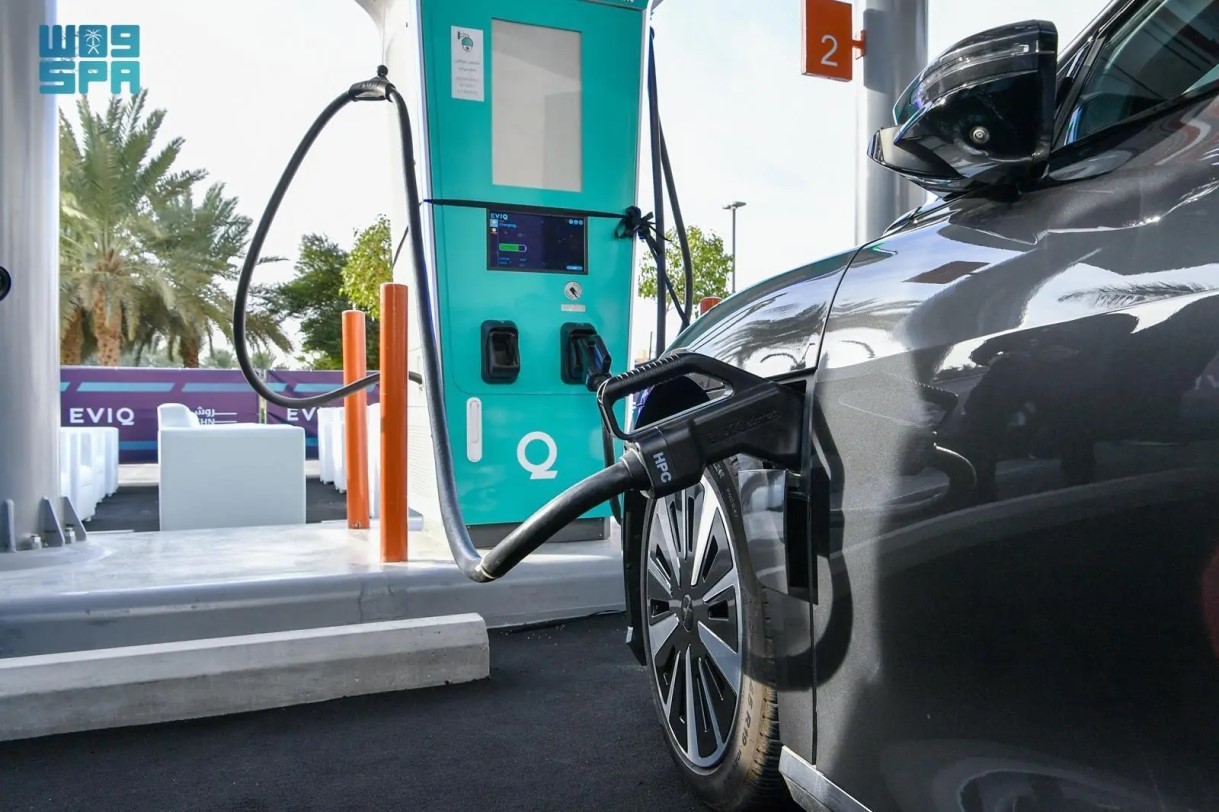
There are other hurdles for Saudi’s EV sector to overcome. Today, sparse highway chargers undermine longdistance travel in the Kingdom. For instance, along the 900-km Riyadh to Mecca route, chargers are still rare, and Saudis still generally prefer to fly that distance. Saudi Arabia has unveiled plans—via state entities like PIF’s EVIQ—to install 5,000 public fast chargers by 2030, a dramatic scale-up from the estimated 130 existing fast chargers (as of mid-2025).
Consumer concerns extend beyond ‘range anxiety’ and include affordability and limited EV model availability—especially below the luxurious $65,000 price point which remains significant in Saudi Arabia. While Europe and China have significantly more low-cost EV options, the models available in Saudi remain far more in the luxurious category. These are just some of the significant deterrents consumers are weighing today in their decision to go electric or not.
A Cultural Shift
One of the Kingdom’s most underappreciated challenges in its EV transition isn’t technical—it’s cultural. For decades, gasoline has been a symbol of national pride, energy security, and abundance in Saudi Arabia, where it sells for a fraction of global prices and powers virtually every vehicle. Electricity, by contrast, was historically seen as less reliable—especially outside urban centers, where power cuts were once common. For many Saudis, especially in rural areas, the idea of plugging in a car still feels riskier than filling up at the pump.
Changing this perception will take more than infrastructure. It requires a narrative shift: positioning EVs not just as eco-friendly alternatives, but as symbols of innovation and Vision 2030’s forward-looking identity. Brands like Ceer and Lucid are working to localize performance, build consumer trust in heat-resilient technology, and reframe the EV as a smart, high-tech choice—tailor-made for a modern Saudi Arabia. But winning hearts in the world’s oil capital means rewriting deep-rooted habits, one charge at a time.
Despite the challenges and obstacles Saudi has yet to overcome, the future outlook is looking rosy. A recent consumer survey found that 45% of Survey Respondents in the Kingdom were thinking about buying an Electric Vehicle in the coming three years.
One of the Kingdom’s most underappreciated challenges in its EV transition isn’t technical—it’s cultural. For decades, gasoline has been a symbol of national pride, energy security, and abundance in Saudi Arabia, where it sells for a fraction of global prices and powers virtually every vehicle. Electricity, by contrast, was historically seen as less reliable—especially outside urban centers, where power cuts were once common. For many Saudis, especially in rural areas, the idea of plugging in a car still feels riskier than filling up at the pump.
Early Days
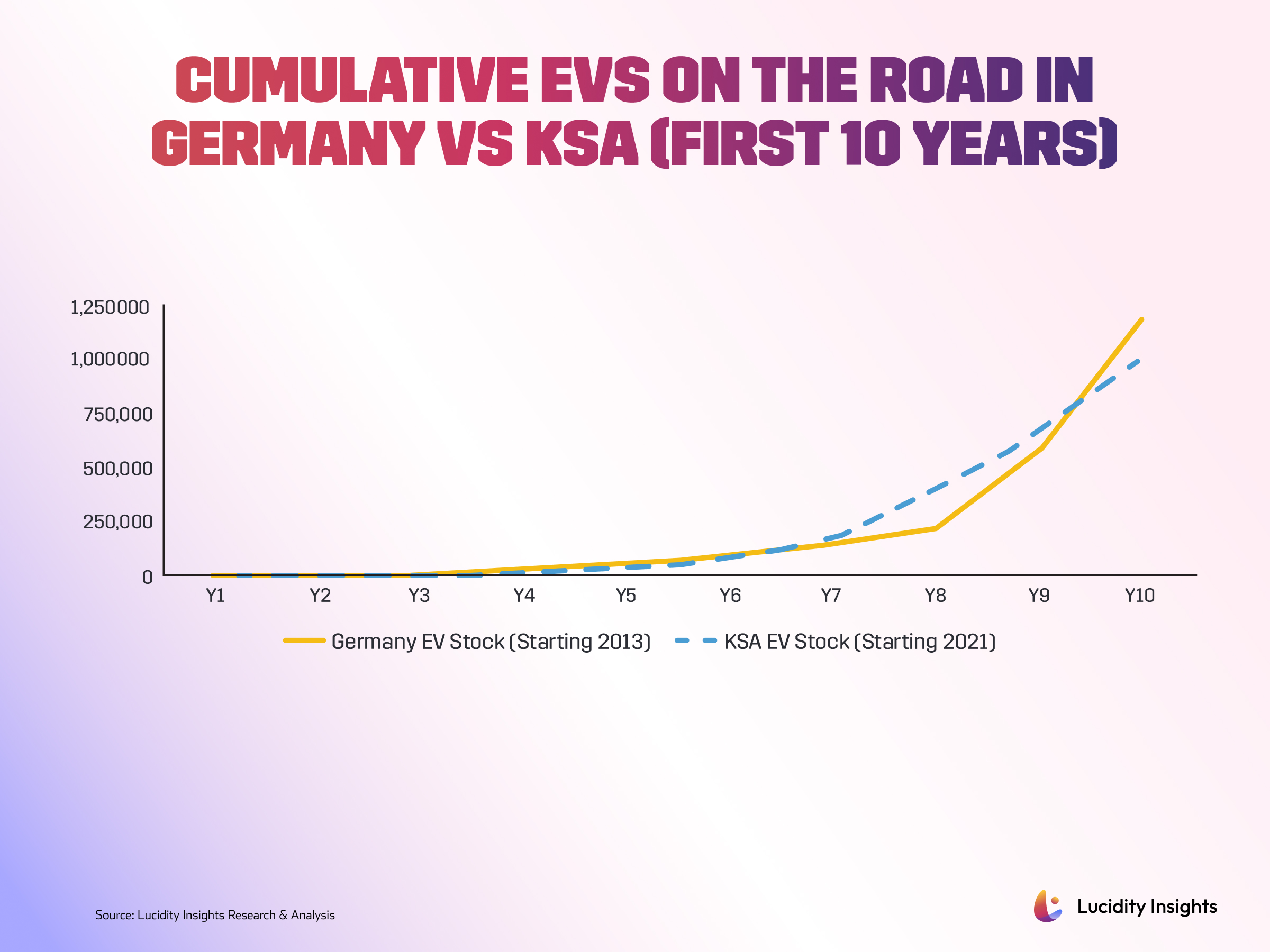
Saudi Arabia, with just over 23,000 EVs on the road in early 2025, is at the very start of its electrification journey—roughly where Germany stood in early 2016. In contrast, Germany has surpassed 2.6 million EVs in 2025, fueled by over a decade of strong government incentives, EU emissions regulations, and consumer trust in local brands like Volkswagen, Mercedes and BMW. While Germany’s rise was gradual, finally achieving 2.4% EV stock out of the total national car population in 2022. Saudi Arabia is aiming for a much steeper curve—driven by Vision 2030, $50+ billion in State-backed EV investments, a more mature global EV supply chain, and a clear industrial policy to become a regional manufacturing hub. In 5 years time, our internal analysis suggests that Saudi Arabia will be aiming to have nearly 7% of its passenger car population electrified. However, unlike Germany, Saudi must overcome hotter climates, deeply entrenched oil culture, and a nascent charging infrastructure. Still, with strategic partnerships and localized innovation, the Kingdom hopes to fast-track its EV growth—compressing what took Germany a decade into just a few transformative years.
Final Lap: A Kingdom in Motion
Saudi Arabia’s rapid EV pivot combines lessons from China’s manufacturing juggernaut with hyper-paced domestic policy, visionary investment, and public-sector resolve. Over the next five years, its success hinges on execution across interlocking fronts: sales growth, manufacturing buildout, reliable charging infrastructure, and cultural embrace.
This isn’t just a national initiative—it’s a national reinvention. Should the Kingdom succeed, it will demonstrate that an oil-rich desert State can transform into a green mobility pioneer, powered not by crude, but by confidence in electricity, climate stewardship, and economic foresight.
That is the scale of Saudi Arabia’s sustainable mobility transition—and it’s unfolding right now.
%2Fuploads%2Fev-2025%2Fcover27.jpg&w=3840&q=75)